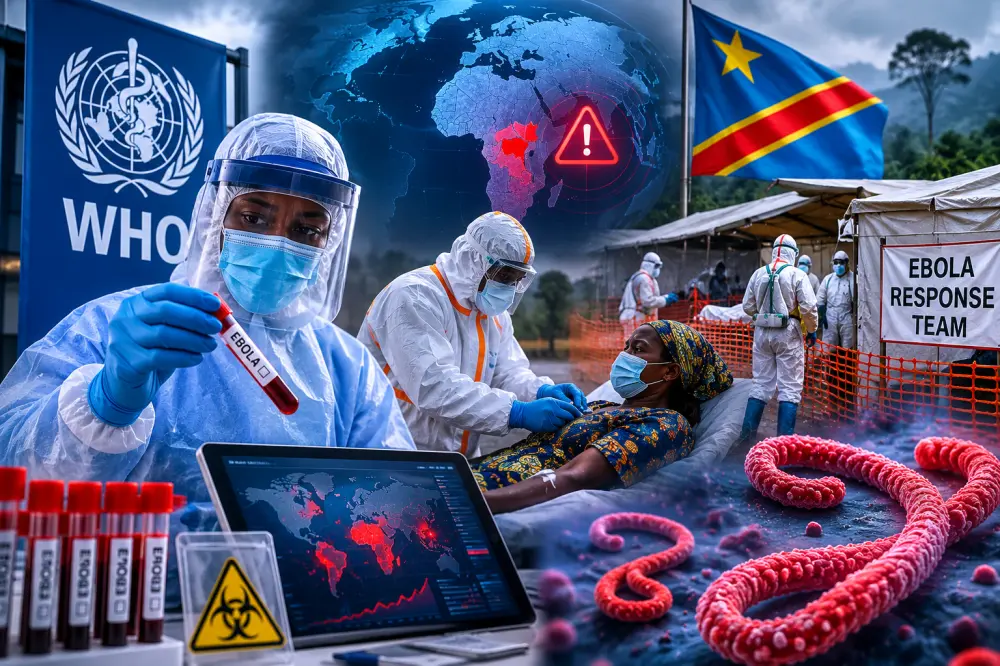
The World Health Organization (WHO) has warned that the Ebola outbreak affecting parts of Central Africa continues to spread faster than international response efforts, raising concerns among health experts about the need for additional funding, stronger surveillance, and expanded emergency medical support.
Officials say the outbreak remains concentrated in the Democratic Republic of Congo, with confirmed cases also reported in neighboring Uganda, making regional cooperation essential to containing the disease.
According to WHO officials, health workers are facing significant challenges in tracing contacts, expanding treatment capacity, and carrying out safe burials in affected communities. These measures are considered essential for breaking chains of transmission, but limited resources and logistical difficulties continue to slow response efforts. Public health teams are also working to improve disease surveillance in areas where access remains difficult because of insecurity and poor infrastructure.
The current outbreak involves the Bundibugyo strain of the Ebola virus, a variant for which there is still no widely approved vaccine. Researchers and international health organizations are accelerating work on potential vaccines and treatments while deploying additional medical personnel, laboratory equipment, and protective supplies to affected regions. Scientists say early detection and rapid isolation of infected patients remain the most effective tools for limiting further spread.
International agencies have appealed for greater financial support as the response expands. Health officials warn that outbreaks can grow rapidly if surveillance systems become overwhelmed or communities are unable to access timely medical care. Governments across the region are strengthening border screening, increasing laboratory testing, and coordinating with international partners to reduce the risk of cross-border transmission.
Medical experts continue emphasizing that Ebola is transmitted through direct contact with the bodily fluids of infected individuals rather than through the air. Public awareness campaigns are encouraging people to seek medical attention immediately if symptoms develop and to cooperate with contact-tracing teams, which play a crucial role in containing outbreaks before they spread to larger populations.
The WHO says the overall global risk remains low, but officials stress that continued international cooperation will be necessary until the outbreak is fully contained. Health agencies believe that sustained funding, improved surveillance, community engagement, and expanded treatment capacity will be critical to preventing additional infections and protecting vulnerable communities across the region.


 Cristiano Ronaldo has hinted that the 2026–27 season could be his final year in professional football after more than two decades at the top of the sport.


0 Comments: