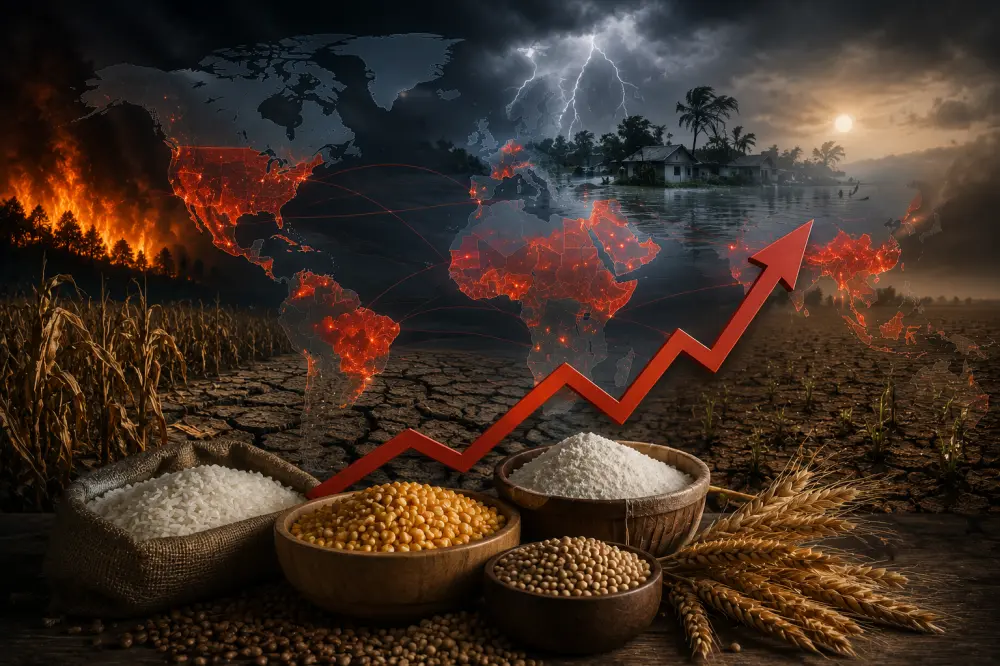
Global food prices are rising once again as severe weather conditions continue disrupting agricultural production across Europe, Asia, and the Americas, creating fresh concerns about inflation, food affordability, and long-term supply stability. Economists and agricultural experts say the latest increase reflects a combination of prolonged droughts, destructive floods, intense heatwaves, and unpredictable rainfall that have damaged harvests in some of the world's most important food-producing regions.
Farmers in several countries are reporting lower crop yields after months of extreme weather affected wheat, corn, rice, soybeans, and vegetable production. In parts of southern Europe, persistent heat has reduced soil moisture and accelerated crop stress, while heavy flooding in sections of Asia has destroyed farmland and delayed planting seasons. Across parts of the Americas, changing weather patterns have also affected livestock production and grain harvesting, adding further pressure to global food supplies.
The increase in food prices is already being felt in international commodity markets, where the cost of key agricultural products has moved higher in recent weeks. Analysts say rising transportation costs, supply chain disruptions, and stronger demand from importing countries are amplifying the impact of lower production. Countries that rely heavily on imported food may experience higher consumer prices if the trend continues over the coming months.
Consumers are likely to notice the effects in supermarkets as retailers gradually adjust prices to reflect higher wholesale costs. Staple foods including bread, cooking oil, cereals, dairy products, and meat could become more expensive if agricultural production remains below expectations. Restaurants and food manufacturers are also monitoring the situation as they face increasing costs for raw ingredients.
International organizations have warned that food security could become a growing challenge, particularly in lower-income countries where households already spend a significant share of their income on food. Rising prices can place additional pressure on families struggling with broader increases in housing, transportation, and energy costs, making inflation a continuing concern for governments around the world.
Agricultural experts say climate change is contributing to more frequent and more intense weather extremes, making farming increasingly difficult in many regions. Longer droughts, stronger storms, unexpected rainfall, and record temperatures are forcing farmers to adopt new technologies, improve irrigation systems, and invest in more resilient crop varieties capable of withstanding changing environmental conditions.
Governments are responding with a range of measures aimed at protecting domestic food supplies and supporting farmers. Some countries have introduced financial assistance programs, while others are investing in climate-resilient agriculture, water management, and improved storage infrastructure. Central banks are also closely monitoring food inflation because sustained increases in prices can influence broader monetary policy decisions.
Despite current challenges, analysts remain cautiously optimistic that global food markets will stabilize if weather conditions improve during upcoming planting and harvesting seasons. Advances in agricultural technology, improved forecasting, and international trade continue helping reduce the impact of localized production shortages, although experts warn that climate-related risks are likely to remain an important factor influencing food prices for years to come.
The latest increase in global food prices highlights how closely weather, agriculture, international trade, and household budgets are connected. As climate events become more unpredictable, governments, businesses, and consumers may need to prepare for greater volatility in global food markets while investing in long-term solutions that strengthen food production and improve resilience against future climate shocks.


 Cristiano Ronaldo has hinted that the 2026–27 season could be his final year in professional football after more than two decades at the top of the sport.




0 Comments: