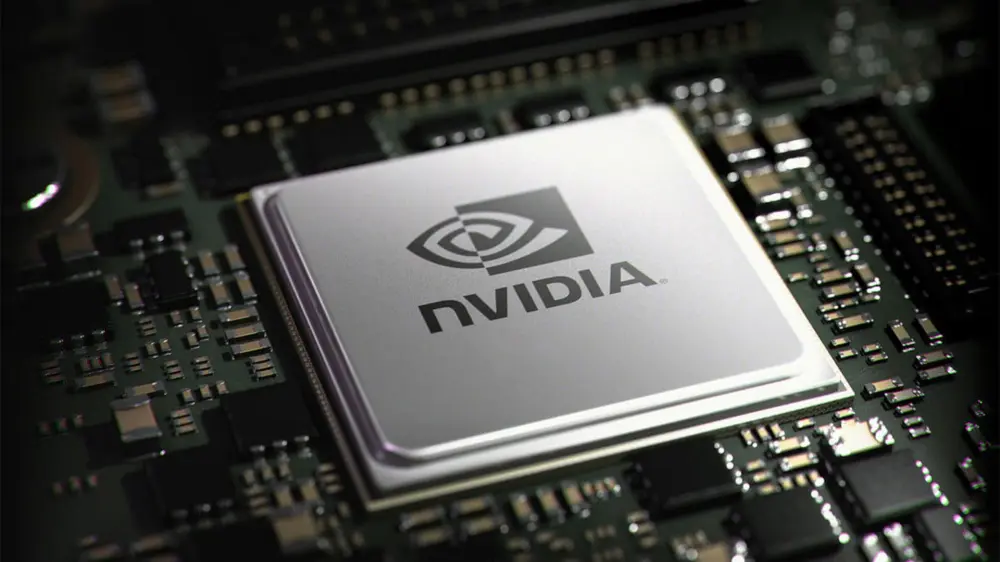
Nvidia has taken another major step in the rapidly expanding artificial intelligence industry by introducing its latest generation of AI processors, reinforcing its position at the center of one of the world's fastest-growing technology markets.
The announcement comes as demand for AI computing infrastructure continues to surge, with governments, cloud providers, financial institutions, healthcare organizations, and technology companies investing billions of dollars in next-generation data centers capable of supporting increasingly powerful artificial intelligence systems.
The new processors are designed to deliver significantly higher performance while reducing energy consumption, two factors that have become increasingly important as AI models continue growing in size and complexity. Modern generative AI systems require enormous computing power to train and operate, placing unprecedented demand on graphics processors, networking equipment, cooling systems, and high-speed storage infrastructure.
Industry analysts believe Nvidia's newest platform could accelerate the global expansion of AI services across multiple sectors. Businesses are increasingly integrating artificial intelligence into customer support, software development, scientific research, financial analysis, manufacturing, logistics, cybersecurity, and healthcare diagnostics. Every new AI application increases demand for specialized processors capable of handling massive workloads with greater efficiency.
Cloud computing companies remain among Nvidia's largest customers. Major providers continue expanding hyperscale data centers to meet growing enterprise demand for AI services, allowing businesses to access powerful computing resources without building expensive infrastructure themselves. This trend has transformed AI from a technology used primarily by research laboratories into a mainstream business tool available to organizations of every size.
The semiconductor industry has become one of the most strategically important sectors in the global economy. AI processors are now viewed as critical infrastructure, similar to electricity networks or telecommunications systems, because they power everything from intelligent search engines and autonomous vehicles to advanced robotics and scientific simulations. Governments worldwide are investing heavily in semiconductor manufacturing to strengthen domestic supply chains and reduce dependence on overseas production.
Competition within the AI hardware market is also intensifying. Companies including AMD, Intel, Google, Amazon, Microsoft, and several specialized semiconductor firms are developing alternative AI accelerators designed to compete with Nvidia's dominance. While Nvidia continues holding a significant market share, rivals are investing aggressively in custom chips optimized for specific AI workloads and cloud environments.
Energy efficiency has become another major focus. As AI data centers consume increasing amounts of electricity, operators are seeking hardware capable of delivering greater computing performance while minimizing power usage. Nvidia says its latest architecture has been engineered to improve both processing speed and operational efficiency, helping organizations lower long-term operating costs while supporting sustainability goals.
The rapid expansion of AI infrastructure is also creating broader economic opportunities. Construction companies, networking equipment manufacturers, cooling technology providers, power generation firms, and software developers are all benefiting from increased investment in AI facilities. Analysts estimate that global spending on AI infrastructure will continue reaching record levels over the coming years as organizations modernize their digital operations.
Financial markets continue watching Nvidia closely because the company's performance is often viewed as a leading indicator of broader investment in artificial intelligence. Strong demand for AI processors has contributed to substantial growth in the semiconductor industry, while investors continue evaluating how long the current expansion in AI spending will continue.
Researchers also expect the new processors to accelerate scientific discovery. Universities and research institutions increasingly rely on AI hardware to model climate systems, analyze medical data, simulate molecular structures, develop new pharmaceuticals, and process massive astronomical datasets. Faster computing enables researchers to complete work in days that previously required weeks or months.
The introduction of Nvidia's newest AI chips highlights how artificial intelligence has moved beyond software innovation into a global competition centered on computing infrastructure. As businesses, governments, and research organizations continue investing in AI capabilities, advanced processors will remain the foundation powering the next generation of intelligent technologies.
For the semiconductor industry, the race to build faster, more efficient AI hardware is only becoming more competitive, ensuring that innovation in computing will remain one of the defining business stories of the decade.


 Cristiano Ronaldo has hinted that the 2026–27 season could be his final year in professional football after more than two decades at the top of the sport.



0 Comments: