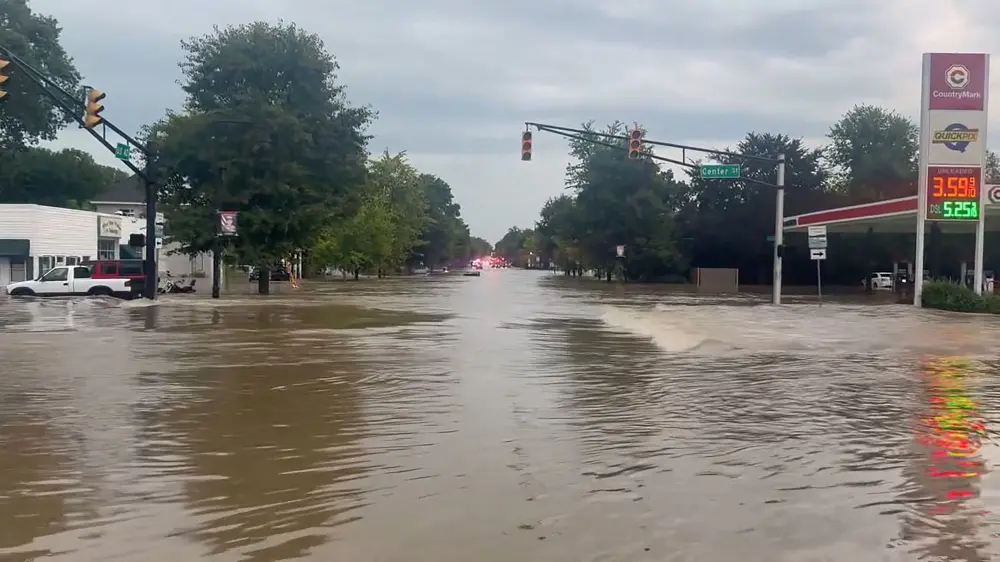
A realistic cinematic international news photograph of severe flooding in Indianapolis, Indiana, with streets covered by rapidly rising water, emergency rescue boats carrying residents to safety, submerged vehicles, dark storm clouds and heavy rain, damaged homes and trees in the background, dramatic but realistic editorial photography, 16:9, no text, no logos, no watermark.
Severe storms and record-setting flooding have killed at least six people in Indiana as emergency crews continue rescuing residents from flooded communities and authorities warn that dangerous conditions remain. The disaster has produced some of the worst flooding the state has experienced in decades, with the White River rising to levels that exceeded records dating back to 1913.
The flooding followed several days of powerful storms that brought torrential rainfall, damaging winds and flash flooding across parts of the U.S. Midwest and Ohio Valley. Indiana has suffered the most severe impact, but storm damage has also been reported across Illinois, Ohio, Kentucky, West Virginia and Pennsylvania.
The White River became one of the biggest concerns as water levels rose rapidly. The river reached more than 24 feet in Anderson and Noblesville, surpassing records established more than a century ago. Indianapolis Mayor Joe Hogsett described the flooding as the worst the city has experienced in more than 30 years.
Flooding remains active across central Indiana on Sunday. The National Weather Service said widespread flooding continues along the White River and its tributaries, with major flooding reported at several locations. Flood warnings remain in effect for multiple sections of the river system, including areas near Indianapolis, Anderson and Noblesville.
The human toll has continued to rise as emergency crews reach areas affected by the flooding. At least six people have died, including a 4-year-old boy, according to Indiana emergency officials. Other deaths have been linked to dangerous flood conditions and storm-related incidents, while rescue teams have continued searching for people reported missing.
Hundreds of people have already been evacuated from flooded communities. In Delaware County alone, officials reported more than 350 evacuations, while emergency crews have carried out numerous water rescues in Indianapolis and other affected areas. Boats have been used to reach residents stranded by rapidly rising water.
The flooding has also disrupted electricity supplies. More than 130,000 customers remained without power on Sunday, although that figure was significantly lower than the peak of roughly 300,000 outages during the wider storm emergency. Downed trees, damaged power infrastructure and flooded roads have complicated restoration efforts.
The storms have caused damage well beyond Indiana. Earlier in the week, more than 800,000 utility customers across Illinois, Indiana, Ohio and Kentucky lost power following powerful storms that produced destructive winds, tornadoes and flooding. Some wind gusts approached 100 mph, while communities across the region reported widespread damage to homes, roads and electrical infrastructure.
Emergency officials are particularly concerned about people attempting to drive through flooded roads. Floodwater can hide damaged pavement, debris and washed-out sections of road, while relatively shallow moving water can still sweep vehicles away. Authorities have repeatedly urged residents to follow evacuation orders and avoid entering flooded areas.
The disaster has also created significant challenges for emergency responders. Roads blocked by water and debris can prevent ambulances, fire crews and rescue teams from reaching communities quickly. In some areas, emergency workers have had to use boats to reach people trapped inside homes or mobile-home communities.
Federal assistance is now being made available. President Donald Trump approved Indiana Governor Mike Braun's request for federal disaster aid as the state works to respond to the damage and begin recovery. The assistance is expected to support emergency operations and help affected communities deal with the consequences of the flooding.
For residents, however, the emergency is not over simply because the heaviest rainfall has ended. Rivers can remain dangerously high for days after major rainfall, particularly when water from upstream areas continues moving downstream. The National Weather Service continues to warn of widespread flooding along the White River and associated waterways.
The scale of the flooding means the damage assessment will likely take time. Officials must determine how many homes and businesses were affected, which roads and bridges require repairs and how much infrastructure was damaged. Some losses may not become clear until floodwaters recede and residents can safely return to their properties.
The Midwest is now facing the difficult transition from emergency response to recovery while some areas are still dealing with active flooding. Communities will need to restore electricity, reopen roads, inspect buildings and provide assistance to families who have been forced from their homes.
The Indiana disaster is also highlighting how quickly severe weather can create multiple emergencies at once. Powerful storms produced damaging winds and tornadoes in some locations, while prolonged heavy rainfall produced river flooding and flash floods elsewhere. The combination has placed significant pressure on emergency services across several states.
For Indiana residents living near the White River and its tributaries, the immediate priority remains safety as floodwaters continue to move through affected communities. Officials are urging residents to follow local evacuation instructions and stay away from flooded roads and dangerous waterways.
With six confirmed deaths, record river levels and thousands of residents affected by evacuations and power outages, the Indiana flooding has become one of the most significant weather emergencies in the U.S. Midwest this month. The full cost of the disaster will not be known until the water recedes, but emergency crews are still working to protect residents and reach communities affected by the historic flooding.

 Cristiano Ronaldo has hinted that the 2026–27 season could be his final year in professional football after more than two decades at the top of the sport.



0 Comments: