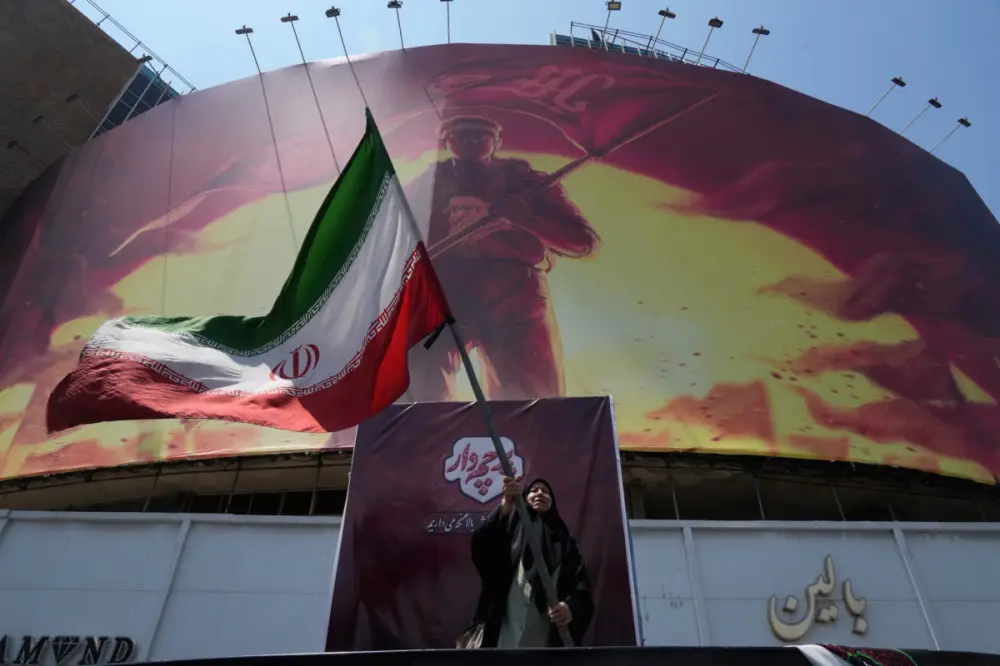
Iran has warned Gulf Arab states that they could face attacks on critical infrastructure if the United States launches another round of strikes against Iranian territory, adding a new layer of tension to a crisis that is already threatening energy supplies and international shipping.
The warning comes at the same time as Iran and Oman move closer to an agreement aimed at restoring shipping through the Strait of Hormuz, creating a complicated diplomatic picture in which efforts to reduce tensions are taking place alongside threats of further military escalation.
Iranian Foreign Minister Abbas Araqchi delivered the warning through diplomatic channels, telling Gulf countries that renewed American attacks could trigger Iranian retaliation against important energy and infrastructure facilities across the region. The message was directed at countries including Saudi Arabia, Qatar and Oman, all of which have maintained relationships with Washington while attempting to prevent the conflict from spreading into their own territories.
The warning has placed Gulf governments in an increasingly difficult position. These countries want to maintain their security partnerships with the United States, but they also have strong economic reasons to prevent Iran from expanding the conflict to their territory. Their oil facilities, electricity networks, ports and other infrastructure could become targets if the confrontation escalates.
Saudi Arabia has urged Washington to prioritize diplomacy and avoid another military escalation, while Riyadh has also made clear that it would defend itself if attacked. The position reflects the delicate balance facing Gulf governments as they attempt to remain outside the direct conflict while protecting their national interests.
The Strait of Hormuz has become the central economic issue in the crisis.
The waterway is one of the world's most important energy routes, linking the Persian Gulf with international shipping lanes. Large quantities of crude oil and liquefied natural gas normally pass through the strait, making any disruption capable of affecting fuel prices, shipping costs and inflation around the world.
Iran and Oman are now discussing an arrangement that could allow commercial shipping to resume under a new system. According to current reporting, the two countries are close to finalizing a deal, although important details remain unresolved and Washington is not directly participating in the arrangement.
The proposed arrangement could represent an important diplomatic development if it survives the remaining negotiations. Restoring reliable shipping through Hormuz would reduce pressure on international energy markets and could provide businesses with greater certainty after months of disruption.
Oil markets have already reacted to signs of progress. Brent crude recently moved below $80 per barrel as traders assessed the possibility that Iran and Oman could reach an agreement over the waterway. Investors remain cautious because the situation can change quickly if military tensions rise again.
The conflicting developments demonstrate why the crisis remains difficult to predict. On one side, diplomatic negotiations are creating optimism that shipping could return to normal. On the other, Iran is warning that another U.S. attack could trigger retaliation across the Gulf.
For Washington, the situation presents a difficult strategic decision. President Donald Trump has repeatedly threatened further action against Iran while also signaling that he wants negotiations to produce a settlement. A new military operation could therefore undermine the diplomatic progress currently being made around Hormuz.
Trump has also rejected reports that the United States is running short of military ammunition, an issue that has become increasingly important as the conflict continues. Reports about depleted U.S. stocks have raised questions about Washington's ability to sustain a prolonged high-intensity campaign.
Iran's warning is also designed to influence the governments of countries hosting U.S. military facilities. Several Gulf states contain important American bases and logistical facilities, making them strategically important to any future U.S. military campaign.
If Iran were to attack those facilities or critical infrastructure, the consequences could spread rapidly. Oil production could be disrupted, shipping insurance costs could increase and financial markets could respond with renewed concern about a wider regional war.
The threat to energy infrastructure is particularly significant because Gulf countries contain some of the world's most important oil and gas facilities. Damage to refineries, pipelines, export terminals or electricity systems could affect both domestic economies and international energy markets.
The possibility of a wider conflict is therefore being closely watched by governments in Europe and Asia. Countries that depend heavily on Middle Eastern energy imports have strong incentives to support diplomatic efforts that keep shipping routes open.
Asian economies would be particularly vulnerable to a prolonged energy disruption because many of the world's largest oil and gas importers are located in the region. Higher energy prices could increase manufacturing costs and put additional pressure on households already dealing with inflation.
European governments are also monitoring the situation because a renewed energy shock could affect transportation, industrial production and consumer prices. Although Europe has diversified its energy supplies considerably in recent years, another major disruption would still create economic challenges.
The diplomatic role of Oman has consequently become increasingly important. Muscat has traditionally maintained communication channels with both Washington and Tehran, allowing it to act as a mediator when direct negotiations between the two governments become difficult.
The current Hormuz discussions could provide Oman with another opportunity to demonstrate that diplomatic channels can produce practical agreements even when the broader political relationship between Iran and the United States remains deeply hostile.
For Iran, reopening the waterway could provide economic benefits while allowing Tehran to demonstrate that it still has significant influence over regional security. For Oman and other Gulf states, a shipping agreement could reduce the risk of their economies becoming collateral damage in the confrontation.
For the United States, however, any agreement must address concerns over Iran's military and strategic influence in the region. Washington has previously insisted that freedom of navigation must be protected and that Iran should not be able to use the waterway as leverage against the international community.
That disagreement means the Hormuz negotiations could remain fragile even if an initial agreement is reached.
The crisis is also affecting global financial markets. Gold has recently risen sharply as investors seek protection against geopolitical uncertainty, while oil prices have moved lower on expectations that the shipping situation could improve. Stock markets remain sensitive to every major development from Washington and Tehran.
The next major test will be whether the diplomatic progress between Iran and Oman can survive the wider political confrontation between Tehran and Washington.
If the Hormuz agreement is finalized and shipping resumes, it could provide a significant boost to global markets and reduce fears of a wider energy crisis. It could also create a foundation for broader negotiations between Iran and the United States.
If another American strike occurs, however, Iran's warning suggests the conflict could expand rapidly beyond Iranian territory. Gulf energy infrastructure and U.S. military facilities could become part of the confrontation, potentially creating a much larger regional crisis.
For now, the world is watching two competing developments unfold at the same time: diplomacy is attempting to reopen one of the world's most important shipping routes, while Iran is warning that a new military attack could trigger retaliation across the Gulf.
The outcome could have consequences far beyond the Middle East. The future of the Strait of Hormuz will influence oil prices, shipping costs, inflation, financial markets and global trade, making the negotiations one of the most important international developments to watch over the coming days.

 Cristiano Ronaldo has hinted that the 2026–27 season could be his final year in professional football after more than two decades at the top of the sport.

0 Comments: