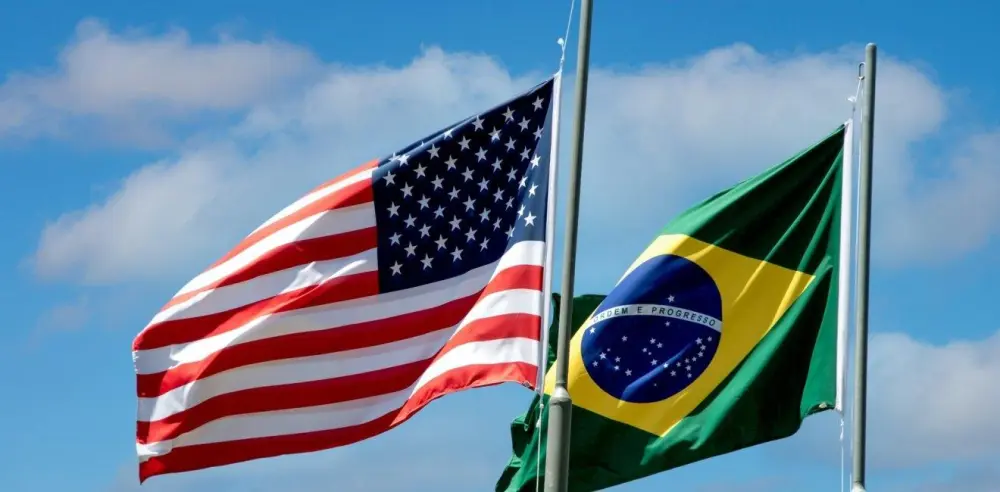
Brazil has officially requested consultations with the United States through the World Trade Organization (WTO), launching a formal challenge against recently imposed U.S. tariffs and opening what could become one of the most closely watched international trade disputes of the year.
The move reflects growing concern among exporting nations that rising protectionist policies could disrupt global commerce, weaken supply chains, and create fresh uncertainty for businesses already navigating a fragile international economy.
The request marks the first formal step in the WTO's dispute settlement process. During consultations, both governments will attempt to resolve their differences through negotiations before the matter potentially advances to a dispute panel. Trade experts say the outcome could influence future tariff policies not only between Brazil and the United States but also among other major economies facing similar disagreements.
Brazilian officials argue that the tariffs create unnecessary barriers for exporters and reduce the competitiveness of Brazilian products in one of the country's most important overseas markets. The government believes that international trade rules should provide predictable conditions for businesses and investors, particularly at a time when global economic growth remains uneven.
The United States has defended its trade measures as necessary to protect domestic industries, strengthen manufacturing, and ensure fair competition. Washington has increasingly relied on tariffs as part of a broader economic strategy aimed at supporting local production while addressing what it views as imbalances in international trade relationships.
Economists note that tariffs rarely affect only two countries. Modern manufacturing depends on highly interconnected supply chains stretching across multiple continents. A single trade restriction can influence the price of raw materials, industrial equipment, transportation services, and consumer products in markets far removed from the original dispute. Companies operating internationally often face higher costs as they adjust sourcing strategies or relocate production to avoid additional duties.
Agriculture is expected to remain one of the sectors most closely affected by the dispute. Brazil is among the world's largest exporters of soybeans, beef, coffee, sugar, poultry, corn, and other agricultural commodities. Any prolonged uncertainty surrounding market access could influence export volumes, shipping contracts, and long-term investment decisions across the farming sector.
Manufacturers are also monitoring developments carefully. Industries ranging from steel and aluminum to automotive components and industrial machinery depend heavily on stable international trading conditions. Business groups have warned that prolonged disputes can delay investment, increase operating costs, and reduce confidence among multinational companies planning future expansion.
Financial markets generally view trade disputes as a source of uncertainty because they may affect inflation, currency values, and economic growth. Investors are expected to watch the WTO consultations closely for any signs that negotiations could lead to a compromise before the disagreement escalates further.
Trade specialists believe the dispute also reflects broader changes in the global economy. Governments are increasingly placing greater emphasis on domestic manufacturing, economic security, and strategic industries while simultaneously attempting to maintain the benefits of international commerce. Balancing those objectives has become one of the defining challenges facing policymakers worldwide.
The World Trade Organization remains one of the primary institutions responsible for resolving commercial disagreements between member states. Although WTO cases can take months or even years to conclude, consultations often provide an opportunity for governments to negotiate practical solutions before formal litigation becomes necessary.
Business leaders hope both countries will reach an agreement that protects economic interests while preserving one of the Western Hemisphere's most important commercial relationships. Stable trade between large economies supports investment, employment, innovation, and long-term business confidence across multiple industries.
As consultations begin, companies involved in international trade will be watching every development closely. Whether the dispute ends through negotiation or proceeds to a formal WTO ruling, its outcome could shape future trade policy discussions well beyond Brazil and the United States, reinforcing the importance of international cooperation in an increasingly interconnected global economy.


 Cristiano Ronaldo has hinted that the 2026–27 season could be his final year in professional football after more than two decades at the top of the sport.



0 Comments: