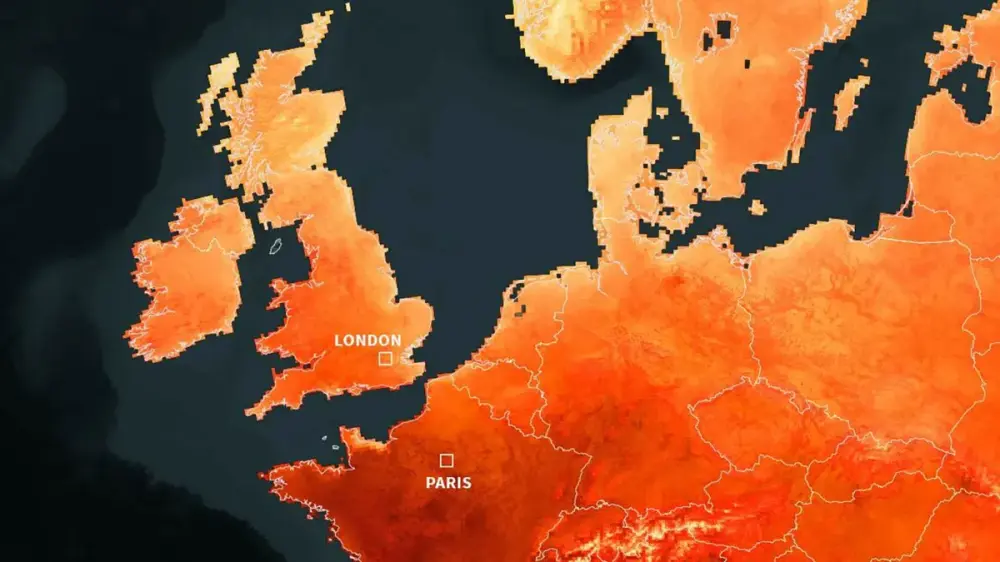
A severe heatwave continues to grip much of Europe, forcing governments to activate emergency response plans as temperatures climb to unprecedented levels across several countries. Meteorological agencies say the current weather system has produced some of the highest June temperatures ever recorded in parts of the continent, placing millions of people under heat alerts and increasing pressure on healthcare services, transport networks, and electricity infrastructure.
Authorities in France, Italy, Spain, the United Kingdom, the Netherlands, Germany, and several other European nations have advised residents to remain indoors during peak afternoon hours while limiting outdoor activities.
Schools have adjusted schedules, public events have been cancelled, and emergency medical teams have been deployed to respond to a growing number of heat-related illnesses. Hospitals are reporting increased admissions involving dehydration, heat exhaustion, and other complications associated with prolonged exposure to extreme temperatures.
Transport systems have also come under pressure as the intense heat affects critical infrastructure. Rail operators have reduced train speeds because of concerns that tracks could buckle under the extreme temperatures, while road surfaces in some regions have suffered damage after prolonged exposure to intense sunlight. Energy providers are monitoring electricity demand closely as millions of households rely on air conditioning and cooling systems, pushing power consumption to unusually high levels.
Environmental agencies have raised wildfire warnings across southern Europe, where dry vegetation and strong winds have created dangerous conditions for fast-moving fires. Firefighters remain on high alert, with additional emergency resources positioned near forests and rural communities considered to be at greatest risk. Officials warn that even a small ignition source could lead to rapidly spreading wildfires under the current weather conditions.
Scientists say the heatwave is being driven by a persistent atmospheric pattern known as an "Omega block," which traps hot air over large areas for several days. Climate researchers also note that rising global temperatures have increased both the frequency and intensity of extreme heat events, making prolonged heatwaves more likely than they were just a few decades ago. While individual weather events are influenced by multiple factors, experts believe long-term climate change is amplifying their severity.
The economic effects are beginning to emerge as agriculture, tourism, transportation, and healthcare sectors respond to the extreme conditions. Farmers are expressing concern over crop stress and water shortages, tourism operators are introducing additional safety measures for visitors, and employers are adjusting working hours to reduce heat exposure for outdoor workers. Businesses dependent on stable weather conditions are also monitoring forecasts closely as temperatures remain well above seasonal averages.
Related post:
Public health officials continue urging residents to stay hydrated, avoid unnecessary travel during the hottest hours of the day, and regularly check on elderly family members and vulnerable neighbours.
With forecasts indicating that high temperatures could persist in parts of Europe for several more days, governments remain on alert as they work to minimise the impact of one of the continent's most significant heatwaves in recent history.


 Cristiano Ronaldo has hinted that the 2026–27 season could be his final year in professional football after more than two decades at the top of the sport.




0 Comments: