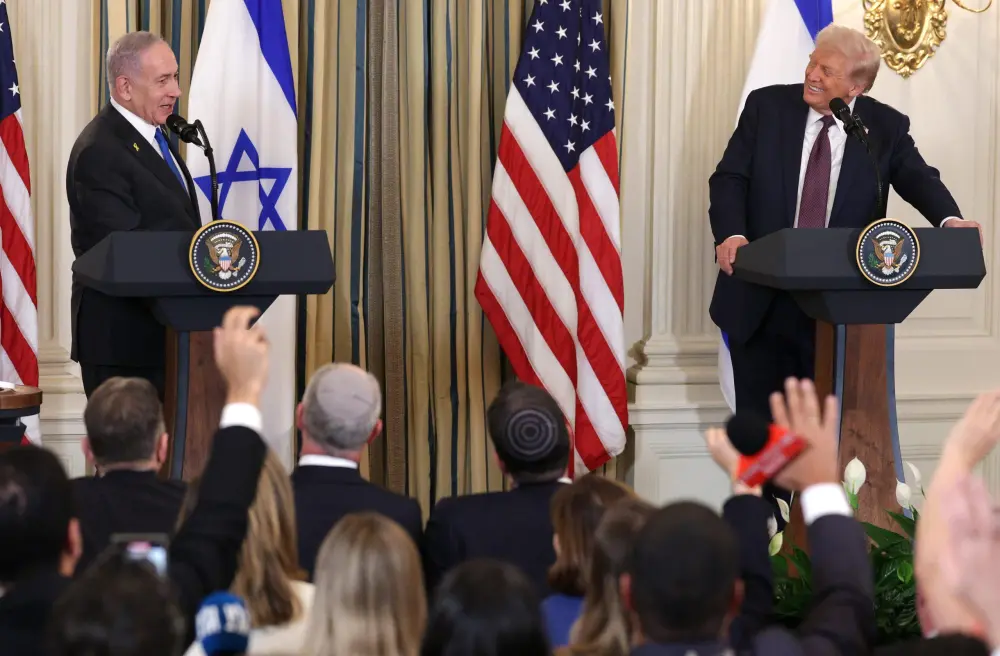
President Donald Trump has welcomed Israeli Prime Minister Benjamin Netanyahu to the White House for what analysts describe as one of the most significant diplomatic meetings of the year. The discussions come at a critical moment for the Middle East, with regional tensions remaining high following recent military confrontations involving Iran, Israel, and the United States. The outcome of the meeting is expected to influence future American policy toward the region while shaping diplomatic efforts aimed at preventing another major conflict.
The White House meeting marks Netanyahu's seventh visit with Trump and comes only days after renewed discussions surrounding Iran's nuclear program, maritime security in the Strait of Hormuz, and broader regional stability. Senior officials from both governments have indicated that security cooperation remains the highest priority, although economic issues, humanitarian concerns, and ongoing diplomatic negotiations are also expected to dominate the agenda.
Relations between Washington and Jerusalem have entered a new phase following the recent military exchanges with Iran. While active fighting has eased compared with previous weeks, intelligence officials continue warning that the possibility of further escalation remains real. Military planners from both countries are reportedly reviewing defense coordination, intelligence sharing, missile interception capabilities, and contingency plans should hostilities resume.
One of the central issues under discussion is Iran's expanding regional influence. American and Israeli officials remain concerned about Tehran's missile capabilities, drone technology, and support for armed groups operating across several parts of the Middle East. Although diplomatic contacts involving regional mediators continue behind closed doors, both governments insist that Iran must not be allowed to threaten regional security or international shipping routes.
Another important subject is the future of the Strait of Hormuz, one of the world's most strategically important waterways. Nearly a fifth of global oil shipments pass through the narrow passage every day, making any disruption a major concern for international energy markets. Recent proposals from regional mediators seeking to reduce tensions around the waterway are expected to receive significant attention during the White House discussions.
The meeting also takes place as international pressure grows for renewed diplomatic engagement across the region. Several governments in Europe and the Middle East have called for negotiations aimed at reducing military tensions while preventing another cycle of retaliatory attacks. Diplomatic observers believe Washington will attempt to balance continued support for Israel with efforts to avoid a wider regional conflict that could destabilize energy markets and international trade.
Economic considerations are also playing an increasingly important role. The recent period of instability has affected investor confidence, energy prices, shipping insurance costs, and commercial transportation throughout the region. Businesses closely tied to international trade continue monitoring every diplomatic development because even limited military escalation could have consequences far beyond the Middle East.
Netanyahu's visit comes during a period of domestic political challenges for both leaders. Decisions made during the talks are expected to influence not only foreign policy but also political debate within their respective countries. Analysts say both governments are seeking to demonstrate strength while avoiding actions that could unintentionally trigger a broader regional confrontation.
Security experts emphasize that cooperation between the United States and Israel remains one of the strongest military partnerships in the world. Intelligence sharing, missile defense collaboration, cybersecurity coordination, and joint military planning have expanded significantly over recent years. Those partnerships are expected to deepen further as new regional security challenges emerge.
The humanitarian situation across parts of the Middle East is also expected to feature prominently during discussions. International organizations continue urging governments to prioritize civilian protection while expanding humanitarian assistance for communities affected by conflict. Aid agencies argue that long-term regional stability depends not only on military deterrence but also on economic recovery and diplomatic engagement.
While no major policy announcements were expected before the meeting began, global attention remains fixed on Washington as diplomats, financial markets, and regional governments await the outcome. Any agreement on security cooperation, Iran policy, or regional diplomacy could shape international relations for months to come.
As the discussions continue behind closed doors, the Trump-Netanyahu meeting has become one of the defining geopolitical events of the week. Whether it results in new diplomatic initiatives or stronger military coordination, its impact is likely to extend well beyond Washington and Jerusalem, influencing the future direction of one of the world's most volatile regions.


 Cristiano Ronaldo has hinted that the 2026–27 season could be his final year in professional football after more than two decades at the top of the sport.


0 Comments: