Fresh tensions have erupted in the South China Sea after China and the Philippines accused each other of dangerous actions during another maritime confrontation in one of the world's most strategically important waterways. The latest incident has once again drawn international attention to a dispute that continues to shape security, diplomacy, and trade across the Indo-Pacific region.
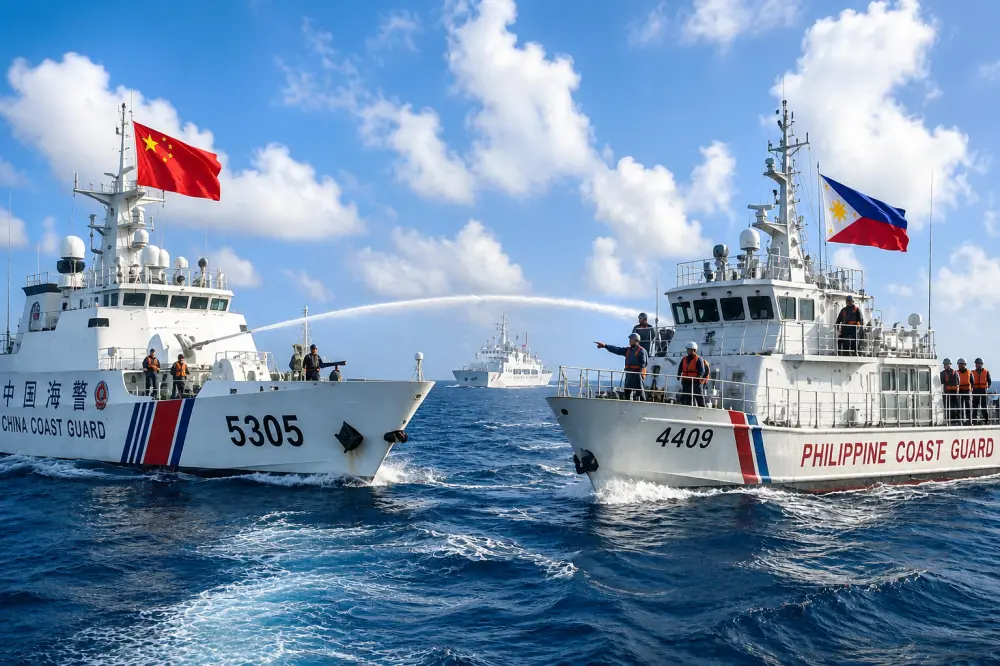
According to Philippine officials, coast guard vessels were conducting routine patrol operations when they encountered Chinese ships operating near disputed waters. Manila said its vessels were carrying out lawful activities within what it considers its exclusive economic zone under international maritime law. Chinese authorities rejected that claim, insisting the vessels had entered waters under Beijing's jurisdiction without authorization.
The confrontation reportedly involved close-range maneuvering between coast guard ships, with both governments releasing separate statements blaming the other side for increasing tensions. Videos and photographs published by both countries offered sharply different accounts of what happened, reflecting the continuing disagreement over sovereignty in the region.
The South China Sea remains one of the world's most contested maritime regions. China claims most of the waterway through its so-called "nine-dash line," while the Philippines, Vietnam, Malaysia, Brunei, and Taiwan also claim parts of the area. The overlapping claims have produced years of diplomatic disputes, legal battles, and occasional confrontations involving coast guards, fishing fleets, and naval vessels.
The dispute extends far beyond territorial boundaries. More than one-third of global maritime trade passes through the South China Sea every year, making it one of the busiest shipping corridors on Earth. Oil, natural gas, consumer electronics, industrial equipment, and agricultural products all travel through these waters, meaning any prolonged instability could have consequences for global supply chains and international markets.
The latest incident has renewed concern among neighboring countries that accidental escalation could occur if vessels continue operating in close proximity. Security analysts warn that while both sides generally seek to avoid open conflict, repeated confrontations increase the possibility of miscalculation or unintended collisions.
The United States has continued expressing support for freedom of navigation throughout the Indo-Pacific and has repeatedly stated that international law should govern maritime disputes. Washington maintains a mutual defense treaty with the Philippines and has expanded military cooperation with Manila in recent years through joint exercises, intelligence sharing, and defense modernization programs.
China, however, argues that outside powers are interfering in regional affairs and increasing tensions by supporting rival claimants. Beijing has consistently maintained that disputes should be resolved directly between countries in the region without external involvement.
Regional organizations have also called for restraint. ASEAN continues encouraging diplomatic dialogue while negotiations over a long-awaited Code of Conduct for the South China Sea remain ongoing. Although discussions have continued for years, governments have yet to reach a final agreement establishing binding rules for managing future incidents.
Fishermen remain among those most directly affected. Many coastal communities depend on access to rich fishing grounds in disputed waters, but increasing patrol activity has made their work more difficult and, in some cases, more dangerous. Several fishermen have reported being forced to leave traditional fishing areas because of heightened maritime security operations.
Energy exploration also remains a major issue.
The South China Sea is believed to contain significant reserves of oil and natural gas, making control over certain areas economically important for countries seeking greater energy independence.
Financial markets are closely monitoring developments because stability in the Indo-Pacific is critical for international commerce. Shipping companies, insurers, exporters, and multinational manufacturers all rely on uninterrupted maritime traffic through the region. While commercial shipping has continued normally, analysts say persistent geopolitical tensions could eventually increase transportation costs if the security situation deteriorates.
Diplomatic experts believe neither China nor the Philippines wants a full-scale military confrontation. Instead, both governments are expected to continue asserting their territorial claims while relying on diplomatic channels to prevent further escalation. Nevertheless, each new encounter attracts global attention because of its potential implications for regional stability.
As naval patrols, coast guard operations, and diplomatic negotiations continue, the South China Sea remains one of the world's most closely watched geopolitical hotspots. The latest confrontation serves as another reminder that competition over territory, trade, and strategic influence in the Indo-Pacific will remain a defining issue in international politics for years to come.


 Cristiano Ronaldo has hinted that the 2026–27 season could be his final year in professional football after more than two decades at the top of the sport.
0 Comments: