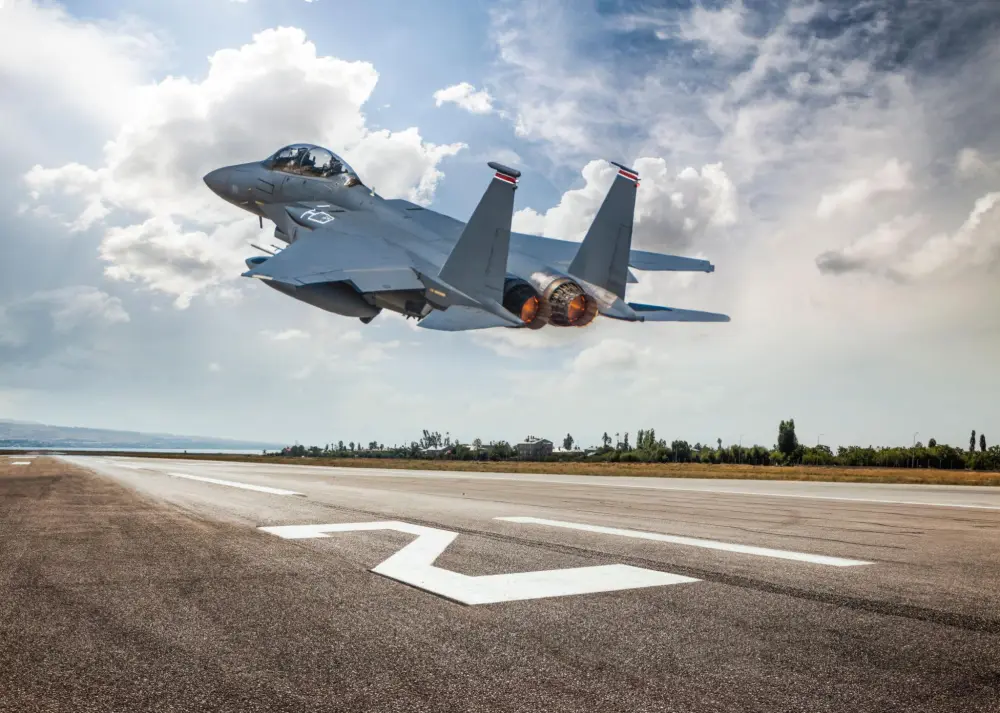
The conflict between the United States and Iran has entered another dangerous phase after President Donald Trump authorized a new wave of American military strikes targeting Iranian Revolutionary Guard Corps facilities across Iran. The operation followed an Iranian missile attack directed toward U.S. military positions in the Middle East, marking one of the most significant military escalations between the two countries in recent months.
According to U.S. Central Command, the military operation lasted for approximately two hours and involved precision strikes against dozens of Iranian military sites. Officials said the targets included command centers, missile launch facilities, drone infrastructure, surveillance systems, coastal defense positions, and logistics hubs believed to support Iran's military operations throughout the region.
The Pentagon described the operation as a direct response to Iran's attempted missile attack and stated that the objective was to reduce Tehran's ability to conduct further attacks against American personnel and allies.
The latest confrontation began after Iranian forces launched ballistic missiles toward American military installations in Jordan. U.S. and Jordanian air defense systems successfully intercepted the incoming missiles before they reached their intended targets, preventing casualties among American and allied forces. Shortly afterward, President Trump announced that the United States would respond decisively, declaring that Iran would face severe consequences for attacking American forces.
The retaliatory strikes have dramatically increased concerns that the conflict could spread beyond Iran and Israel into a wider regional confrontation involving multiple countries across the Middle East. Security analysts warn that every new exchange raises the risk of miscalculation, particularly as military forces from several nations now operate within relatively close proximity throughout the region.
Iranian officials condemned the American operation, accusing Washington of violating international law while promising that the country would continue defending its sovereignty. State media reported explosions in multiple locations following the strikes and confirmed casualties at several military installations. Independent verification of battlefield claims remains difficult because access to affected areas is heavily restricted.
The conflict has increasingly affected neighboring countries. Jordan confirmed that its air defenses intercepted multiple Iranian missiles, while Saudi Arabia has reported attacks on energy infrastructure linked to Iranian-backed groups. Military activity has also expanded into Iraq, where U.S. and allied forces continue monitoring militia activity supported by Tehran.
Global financial markets reacted immediately to the latest escalation. Oil prices moved sharply higher before stabilizing as traders assessed whether shipping through the Strait of Hormuz would remain uninterrupted. The narrow waterway carries a significant percentage of the world's oil exports, making any military activity in the area a major concern for energy markets and the global economy. Shipping companies, insurers, and commodity traders continue monitoring developments hour by hour because even limited disruptions could affect fuel prices worldwide.
International leaders have urged restraint while encouraging renewed diplomatic engagement. Several governments fear that continued military exchanges could destabilize an already fragile region and create broader economic consequences. Diplomatic channels remain active behind the scenes, although repeated military actions have made negotiations increasingly difficult.
Military experts note that the latest strikes demonstrate how modern warfare has evolved.
Precision-guided weapons, drones, satellite intelligence, cyber capabilities, and advanced missile defense systems are playing increasingly important roles in determining the outcome of regional conflicts. The exchange also highlights the importance of integrated air defense networks capable of intercepting ballistic missiles before they reach populated areas or military installations.
The humanitarian situation remains a growing concern. Ongoing military operations have forced additional civilian displacement in several areas while increasing pressure on emergency services and infrastructure. Aid organizations continue calling for the protection of civilians and the preservation of humanitarian access as violence intensifies.
For President Trump, the strikes represent one of the strongest military responses of his current administration and reinforce his stated policy of responding forcefully to attacks on American forces. For Iran, the confrontation underscores its determination to challenge U.S. military influence throughout the region despite mounting international pressure.
Analysts believe the coming days will be critical. If neither side pursues additional large-scale military action, diplomatic efforts could regain momentum. However, another missile attack or retaliatory strike could quickly trigger an even broader regional conflict involving additional state and non-state actors.
With multiple armies operating across the Middle East and global energy markets closely tied to regional stability, the latest confrontation has become one of the world's most closely watched geopolitical developments.

 Cristiano Ronaldo has hinted that the 2026–27 season could be his final year in professional football after more than two decades at the top of the sport.

0 Comments: