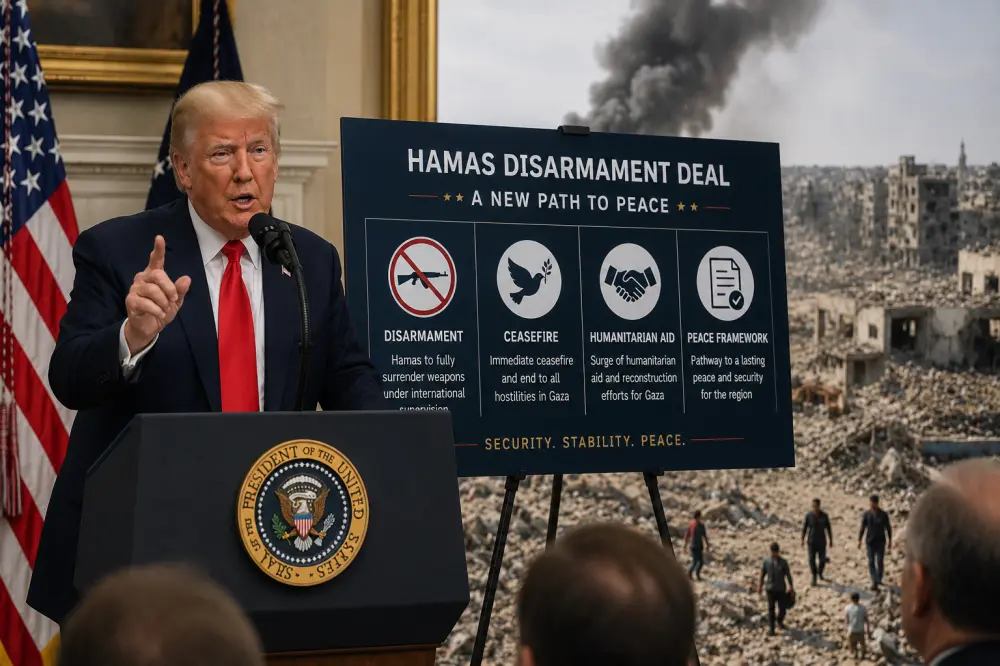
President Donald Trump has announced what he described as a major diplomatic breakthrough aimed at ending one of the longest-running conflicts in the Middle East. According to the White House, negotiators have reached a preliminary framework under which Hamas would begin a phased disarmament process in exchange for a gradual Israeli military withdrawal from Gaza and expanded international reconstruction efforts.
While the proposal has generated cautious optimism, officials acknowledge that significant political and security obstacles remain before any agreement can be fully implemented.
The proposal comes after months of intensive diplomatic discussions involving the United States, regional mediators, and international organizations seeking a lasting solution to the conflict. Officials familiar with the negotiations say the framework would require Hamas to surrender police weapons during the initial phase before eventually decommissioning heavier military equipment under international supervision. In return, Israeli military operations would be gradually reduced while humanitarian access and reconstruction projects expand throughout Gaza.
Trump described the proposal as a historic opportunity to bring stability to a region that has experienced repeated cycles of violence for decades. Speaking after announcing the framework, the president said both sides now have an opportunity to pursue a political solution that prioritizes civilian security and long-term regional peace. He also suggested that recent geopolitical developments involving Iran had contributed to renewed diplomatic momentum.
Despite the announcement, neither side has formally accepted every aspect of the proposal. Israeli officials have not yet confirmed their final position, while Hamas has indicated that any disarmament process would depend on the complete implementation of Israeli withdrawal commitments and internationally guaranteed security arrangements. Diplomatic observers say these differences remain among the most difficult issues negotiators must resolve.
The United Nations has welcomed renewed diplomatic efforts, urging all parties to pursue the proposed roadmap without delay. Humanitarian agencies argue that a sustained reduction in hostilities would allow greater delivery of food, medical supplies, shelter materials, and reconstruction assistance to communities that have experienced prolonged conflict. International aid organizations continue warning that millions of civilians remain dependent on emergency assistance while essential infrastructure requires extensive rebuilding.
Regional governments are closely monitoring the negotiations because any lasting agreement could reshape political and security dynamics throughout the Middle East. Countries that have served as mediators continue encouraging compromise while emphasizing the importance of maintaining dialogue even if disagreements emerge during implementation. Analysts note that previous peace initiatives have struggled because of disputes over timelines, security guarantees, and political authority inside Gaza.
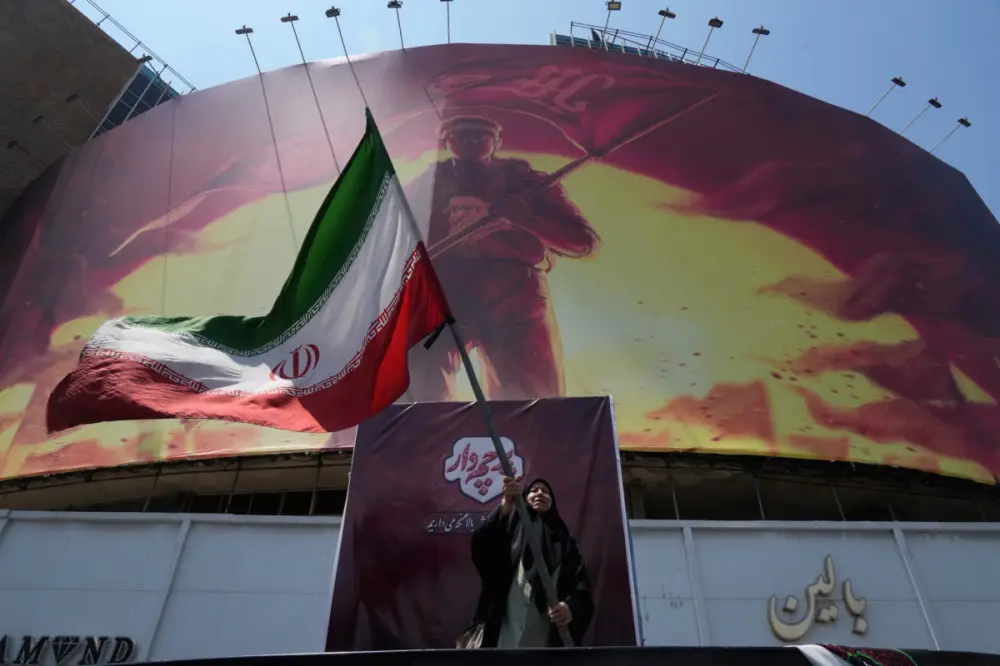
The proposed agreement also has broader geopolitical implications. The United States continues strengthening partnerships with regional allies while attempting to reduce military tensions involving Iran and other armed groups operating throughout the Middle East. Many diplomats believe progress in Gaza could improve the overall security environment and reduce the likelihood of wider regional confrontation.
Financial markets have also reacted cautiously to the announcement. Investors generally view diplomatic progress in the Middle East as positive for global economic stability because the region remains critical for international energy supplies and maritime trade. Although uncertainty remains, reduced military tensions could help stabilize oil markets and improve business confidence.
Security specialists caution that implementing any disarmament agreement will require extensive monitoring, verification, and international cooperation. Previous ceasefires have often collapsed because of disagreements over compliance, making enforcement mechanisms one of the most important components of any future settlement. International observers may ultimately play a significant role in supervising implementation if negotiations continue successfully.
For residents of Gaza, the proposed agreement represents hope after years of conflict, displacement, and humanitarian hardship. Families continue waiting for greater stability, improved access to essential services, and opportunities to rebuild homes, schools, hospitals, and businesses damaged during years of fighting. Humanitarian organizations stress that lasting peace will depend not only on military arrangements but also on economic recovery and long-term political dialogue.
While the road ahead remains uncertain, Trump's announcement has introduced renewed momentum into international diplomacy. Whether the framework evolves into a comprehensive peace agreement or faces new challenges in negotiation, it has already become one of the most closely watched international developments of the year, with governments, financial markets, humanitarian organizations, and millions of people around the world following every new update.

 Cristiano Ronaldo has hinted that the 2026–27 season could be his final year in professional football after more than two decades at the top of the sport.


0 Comments: