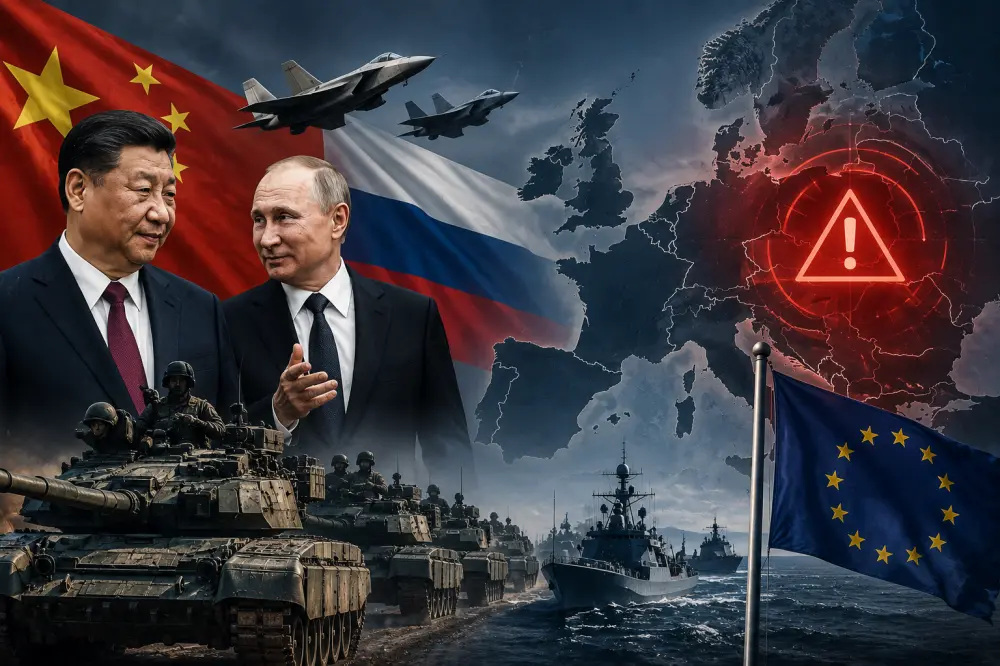
Growing military cooperation between China and Russia is drawing renewed attention from governments across Europe after new reports suggested that defense collaboration between the two countries has expanded significantly over the past year.
Security officials say the closer relationship reflects a broader strategic partnership that could reshape the global balance of power at a time when international tensions remain high over the war in Ukraine and wider geopolitical competition.
According to European officials familiar with intelligence assessments, recent military cooperation has gone beyond diplomatic exchanges and routine exercises. Reports indicate that senior military officers from both countries have increased coordination on training, strategic planning, and defense cooperation, developments that have prompted renewed discussion within NATO about long-term security planning.
Western governments have been monitoring the relationship closely since Russia's invasion of Ukraine. Although China has repeatedly stated that it is not directly involved in the conflict and continues to call for dialogue, European policymakers remain concerned about the broader implications of expanding defense ties between Moscow and Beijing. Officials argue that closer military cooperation between two of the world's largest powers could influence future security calculations far beyond Eastern Europe.
China has consistently denied providing direct military assistance for Russia's operations in Ukraine. Beijing maintains that its relationship with Moscow is based on strategic partnership, economic cooperation, and regional stability rather than participation in ongoing military conflicts. Chinese officials continue urging diplomatic negotiations while criticizing sanctions and policies that they believe prolong international tensions.
Russia, meanwhile, has strengthened political and economic cooperation with China following years of increasing Western sanctions. Trade between the two countries has reached record levels, with energy exports, technology cooperation, and infrastructure investment becoming central pillars of the relationship. Analysts believe expanding economic ties have naturally been accompanied by closer political and military engagement.
The latest reports have generated renewed discussion among NATO members regarding defense preparedness. Alliance officials continue emphasizing the importance of intelligence sharing, cybersecurity cooperation, and joint military exercises designed to strengthen collective security across Europe. Several governments have also announced additional investments in defense modernization and military readiness over the past year.
Security analysts caution that military cooperation between countries does not necessarily indicate preparations for armed conflict. Nations regularly conduct joint exercises, officer exchanges, and strategic consultations as part of broader defense partnerships. However, the scale and frequency of recent interactions between China and Russia have attracted particular attention because of the current international security environment.
The developments also highlight the increasingly global nature of modern geopolitics. Events taking place in Eastern Europe now influence diplomatic relations in Asia, while decisions made in the Indo-Pacific increasingly affect security discussions within Europe. International alliances are becoming more interconnected as governments respond to emerging technological, economic, and military challenges.
Financial markets are also paying close attention. Investors generally monitor geopolitical developments involving major powers because prolonged international tensions can affect energy prices, global trade, shipping routes, financial markets, and business confidence. Although no immediate economic disruption has been reported, continued strategic competition remains an important factor influencing long-term investment decisions.
Diplomatic experts argue that communication between major powers remains essential despite growing disagreements. Maintaining dialogue reduces the risk of misunderstandings while creating opportunities for cooperation on issues including climate change, global trade, nuclear security, and humanitarian assistance. Several international organizations continue encouraging diplomatic engagement even as strategic competition intensifies.
As governments continue evaluating the latest intelligence, the expanding relationship between China and Russia is expected to remain one of the defining geopolitical stories of the year. Whether viewed as a natural evolution of bilateral cooperation or a significant shift in global security dynamics, the partnership is already influencing defense planning, diplomatic strategy, and international relations across multiple regions of the world.


 Cristiano Ronaldo has hinted that the 2026–27 season could be his final year in professional football after more than two decades at the top of the sport.


0 Comments: