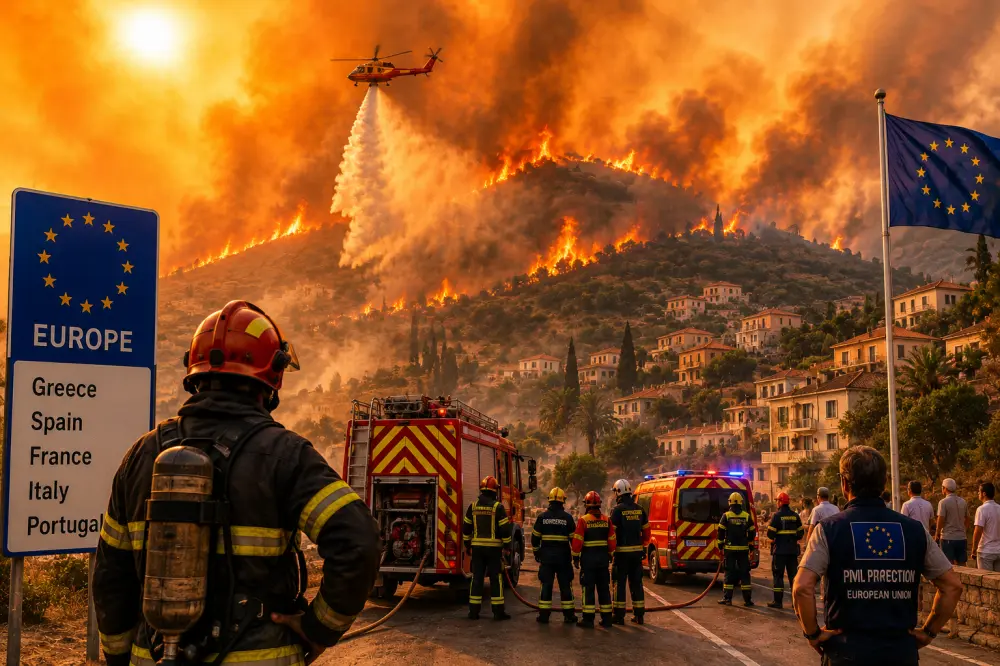
Authorities across Southern Europe are preparing for another dangerous period of extreme wildfire conditions as soaring temperatures, dry vegetation, and powerful winds combine to create one of the highest fire-risk periods of the summer.
Emergency agencies in Spain, Greece, Italy, Portugal, and parts of southern France have increased alert levels while deploying additional firefighters, aircraft, and emergency response teams to regions considered most vulnerable.
Meteorologists say a persistent dome of hot air has pushed temperatures well above seasonal averages across much of the Mediterranean, drying forests and grasslands at an unusually rapid pace. Combined with months of below-average rainfall in several regions, the conditions have created an environment where even a small spark can quickly develop into a fast-moving wildfire.
Fire services have already responded to dozens of smaller blazes over recent days, many of which were brought under control before spreading into nearby communities. However, officials warn that changing wind conditions could allow future fires to grow rapidly, particularly in mountainous terrain where access for emergency vehicles is limited.
Governments throughout the region have introduced temporary restrictions aimed at reducing the likelihood of accidental fires. Open burning has been suspended in many rural areas, while visitors to national parks and forests are being urged to avoid activities that could ignite dry vegetation. Authorities are also increasing patrols around high-risk locations and using drones to monitor remote regions where fires may be difficult to detect during their early stages.
The latest warnings come after Europe experienced several record-breaking summers in recent years, with extreme temperatures contributing to increasingly destructive wildfire seasons. Climate scientists say hotter weather, longer dry periods, and changing rainfall patterns are increasing the frequency of conditions favorable for large wildfires across southern Europe.
Communities living near forests have begun preparing emergency evacuation plans while local governments inspect shelters and emergency supply centers. Residents have been encouraged to clear dry vegetation from around homes, prepare emergency kits, and monitor official weather and emergency updates throughout the week.
Tourism officials are also watching developments closely. Southern Europe remains one of the world's most popular summer travel destinations, welcoming millions of international visitors each year. While airports, hotels, and major tourist attractions continue operating normally, travelers are being advised to stay informed about local weather conditions and follow guidance issued by emergency authorities.
The economic consequences of major wildfires extend far beyond immediate property damage. Agriculture, tourism, forestry, transportation, and insurance industries often experience significant losses following large fire events. Vineyards, olive groves, livestock farms, and rural businesses are particularly vulnerable when fires spread across agricultural land.
Firefighters continue benefiting from increasingly advanced technology. Satellites, artificial intelligence, thermal imaging cameras, and drone surveillance are helping emergency services identify new fires more quickly than ever before. Early detection allows crews to attack fires before they become too large to control, reducing both environmental damage and risks to nearby communities.
Environmental organizations warn that repeated wildfire seasons are changing ecosystems throughout southern Europe. Large fires destroy wildlife habitats, reduce biodiversity, increase soil erosion, and release enormous quantities of carbon dioxide into the atmosphere. Recovery often takes years, with forests requiring decades to fully regenerate after severe fire damage.
European governments are investing heavily in wildfire prevention strategies. New funding is supporting forest management, improved emergency communications, expanded aerial firefighting fleets, and better cooperation between neighboring countries.
Several nations now share firefighting aircraft and specialist teams during periods of extreme fire activity, allowing resources to move rapidly across borders when large emergencies develop.
Health officials are also monitoring air quality as smoke from wildfires can travel hundreds of kilometers, affecting cities far from the fires themselves. Vulnerable groups, including children, older adults, and people with respiratory conditions, are being advised to limit outdoor activities if smoke levels increase.
Scientists believe extreme weather events will continue becoming more frequent as global temperatures rise, making wildfire preparedness increasingly important for governments and communities alike. While emergency services remain confident in their ability to respond quickly, officials emphasize that preventing fires remains far more effective than fighting them once they begin.
As Europe enters another period of intense summer heat, authorities are urging residents and visitors alike to remain vigilant. With millions of hectares of dry vegetation stretching across the Mediterranean region, even a single unattended fire has the potential to become a major emergency.
The coming days will therefore be critical as firefighters, weather agencies, and local governments work together to reduce risks and protect lives, property, and the natural environment.

 Cristiano Ronaldo has hinted that the 2026–27 season could be his final year in professional football after more than two decades at the top of the sport.

0 Comments: