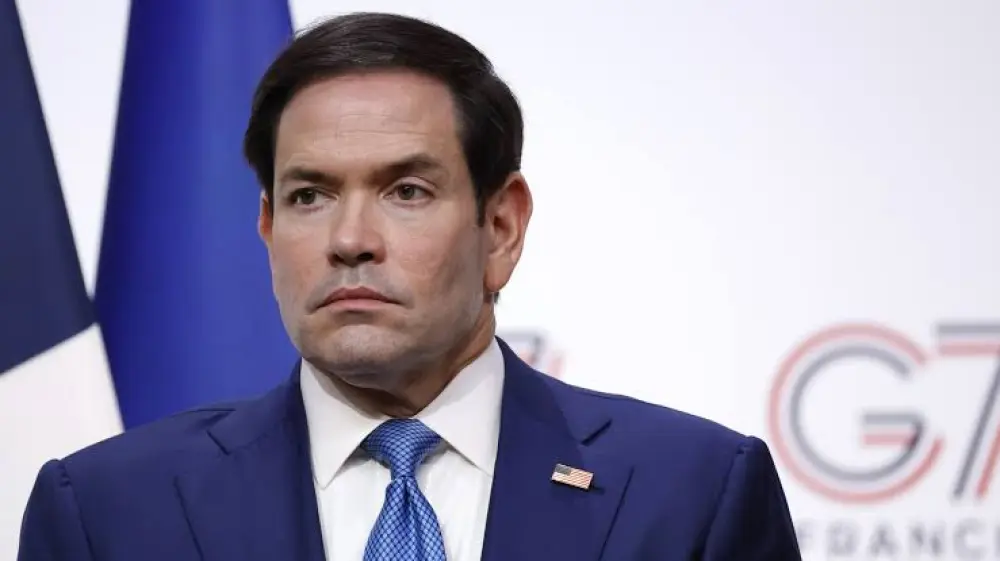
The United States has intensified its diplomatic campaign across the Middle East as Secretary of State Marco Rubio completed a series of high-level meetings with leaders from Gulf nations aimed at strengthening regional support for the proposed peace framework between Washington and Tehran. The diplomatic mission comes at a crucial moment, with negotiations entering a sensitive phase following months of military confrontation that reshaped the security landscape across the region.
Rubio's visit focused on reassuring America's closest regional allies that any long-term agreement with Iran would address the broader security concerns of Gulf nations rather than focusing solely on relations between Washington and Tehran. Officials from Bahrain and other Gulf Cooperation Council (GCC) members emphasized that regional stability cannot be achieved without addressing Iran's ballistic missile capabilities, drone programs, and support for armed groups operating across the Middle East.
The diplomatic effort reflects growing recognition that any lasting peace agreement will require broad regional backing. Gulf states have long viewed Iran's expanding military influence as one of the principal security challenges facing the region, and several governments have sought stronger guarantees that future agreements will reduce rather than increase strategic risks.
One of the most sensitive issues discussed during the meetings involved maritime security in the Strait of Hormuz, one of the world's most important shipping corridors for crude oil and liquefied natural gas exports. During the recent conflict, disruptions to shipping through the waterway caused sharp swings in global energy prices and raised fears of wider economic instability. Gulf leaders reiterated that unrestricted commercial navigation remains essential for international trade and regional prosperity.
Another important topic centered on financial assistance and sanctions relief for Iran. Some Gulf governments reportedly expressed concern over proposals involving large-scale reconstruction funding, warning that future financial assistance should include clear safeguards to ensure resources support economic recovery rather than expanding military capabilities. These discussions highlight the complex balance negotiators must strike between encouraging diplomacy and maintaining regional confidence.
The meetings also addressed broader regional conflicts extending beyond Iran itself. Gulf leaders called for continued diplomatic efforts to stabilize Lebanon, support humanitarian initiatives in Gaza, and encourage political solutions in Syria. Many officials argued that lasting peace in the Middle East will require addressing multiple interconnected crises rather than focusing exclusively on a single bilateral agreement.
Washington continues to emphasize that diplomacy remains its preferred path toward reducing tensions. American officials believe a comprehensive framework could lower the risk of future military confrontation while improving economic stability throughout the region. However, negotiators acknowledge that significant disagreements remain over nuclear oversight, sanctions relief, regional security arrangements, and verification mechanisms.
Regional governments are carefully monitoring every stage of the negotiations because the outcome could influence political, economic, and security conditions across the Middle East for years to come. Energy exporters are particularly interested in ensuring stable shipping routes, while investors continue watching diplomatic developments for signals that could affect oil markets and international trade.
Despite cautious optimism surrounding the negotiations, officials throughout the region remain aware that diplomatic progress could be undermined if key issues remain unresolved. Public statements from both Washington and Tehran continue to reveal differences over implementation, inspections, and long-term commitments, illustrating the complexity of reaching a durable agreement acceptable to all parties involved.
As diplomatic engagement continues, Gulf nations are positioning themselves as essential stakeholders rather than passive observers. Their participation reflects the understanding that any future security architecture in the Middle East must account for the interests of regional governments whose economies, populations, and strategic priorities are directly affected by developments involving Iran and the United States. For now, Rubio's tour has reinforced Washington's commitment to keeping regional allies closely involved as negotiations move toward what could become one of the most consequential diplomatic agreements in the Middle East in recent years.

 Cristiano Ronaldo has hinted that the 2026–27 season could be his final year in professional football after more than two decades at the top of the sport.

0 Comments: