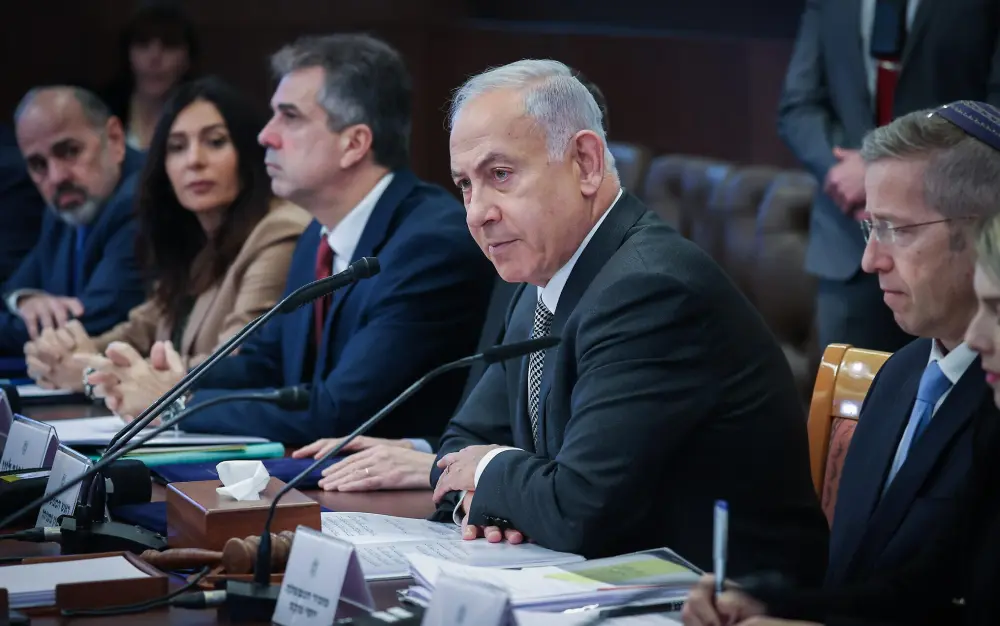
Israel's political landscape is entering a new period of uncertainty as Prime Minister Benjamin Netanyahu faces one of the strongest electoral challenges of his long political career. Recent opinion polls suggest growing public support for former military chief Gadi Eisenkot, whose emergence has intensified competition ahead of Israel's next general election and introduced fresh questions about the future direction of the country's leadership.
The political contest comes at a time when Israel continues to navigate complex security challenges across multiple fronts. Months of military operations, regional diplomatic negotiations, and ongoing tensions involving Gaza, Lebanon, and Iran have placed national security at the center of public debate. For many Israeli voters, the next election is expected to focus not only on economic issues but also on which leader is best equipped to manage the country's security in an increasingly volatile Middle East.
Netanyahu remains one of the most experienced and influential figures in Israeli politics. Having served multiple terms as prime minister, he continues to command significant support among conservative voters who credit his leadership on security and foreign policy. However, recent political developments have created new challenges for his governing coalition, with critics questioning both domestic policy decisions and the handling of regional conflicts.
The emergence of Gadi Eisenkot has altered the political equation. A former chief of staff of the Israeli military, Eisenkot has built a reputation as a respected security figure with decades of operational experience. His military background has attracted voters seeking experienced leadership during a period of heightened regional instability, while his relatively recent entry into frontline politics has allowed him to present himself as an alternative to Israel's traditional political establishment.
Security remains the defining issue of the campaign. The conflict involving Iran, Hezbollah, and militant groups operating around Israel has reinforced public attention on defense policy. Many voters are evaluating candidates based on their ability to prevent future attacks, strengthen national security, and maintain Israel's strategic relationships with international allies, particularly the United States.
Economic concerns are also influencing voter sentiment. Rising living costs, housing affordability, inflation, and government spending have become increasingly important issues for Israeli households. While national security often dominates political discourse, analysts believe economic pressures could play a decisive role in determining how undecided voters cast their ballots.
Israel's relationship with Washington is expected to remain another major campaign issue. The recent diplomatic efforts involving the United States and Iran have generated mixed reactions inside Israel, with some political leaders expressing concern that regional agreements could affect Israel's long-term security interests. These debates are likely to continue throughout the election campaign as candidates outline their foreign policy priorities.
The election also carries broader regional implications. Israel remains a key strategic player in the Middle East, and any change in government could influence future diplomacy involving Iran, Lebanon, Gaza, and broader regional security initiatives. International governments and financial markets are therefore closely monitoring political developments in Jerusalem, recognizing that leadership changes could affect both diplomatic negotiations and regional stability.
Political analysts caution that Israeli elections are often highly competitive and coalition negotiations frequently determine who ultimately forms the government. Even if opinion polls continue to show momentum for opposition figures, building a parliamentary majority remains a complex process involving multiple political parties with differing priorities.
As campaigning intensifies, both Netanyahu and his challengers are expected to focus heavily on security credentials, economic management, and international diplomacy. With regional tensions still shaping the political environment, the outcome of the election could influence not only Israel's domestic agenda but also the future balance of power across the Middle East.


 Cristiano Ronaldo has hinted that the 2026–27 season could be his final year in professional football after more than two decades at the top of the sport.

0 Comments: