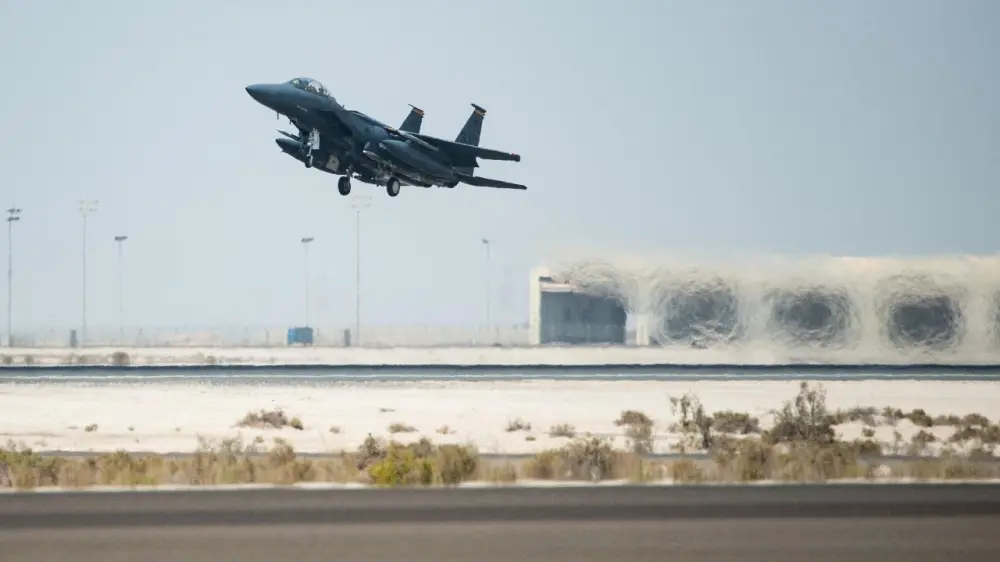
The conflict between the United States and Iran has entered another dangerous phase after American forces carried out airstrikes against Iranian military targets following an attack on a commercial cargo vessel near the Strait of Hormuz. The operation marks one of the most significant military developments since Washington and Tehran agreed to a temporary peace framework earlier this month, raising new doubts about whether diplomatic efforts can survive renewed violence.
According to U.S. officials, the strikes targeted missile launch facilities, drone storage sites, and coastal radar installations believed to have supported the attack on the vessel. The Pentagon described the operation as a defensive response intended to protect international shipping and preserve freedom of navigation through one of the world's most strategically important waterways. American officials argued that allowing such attacks to go unanswered would encourage further threats against commercial vessels operating in the Gulf.
President Donald Trump defended the military action while warning that additional strikes remain possible if Iran continues what he described as hostile actions against international shipping. He insisted that the United States would respond forcefully to any attempt to disrupt maritime trade or threaten American interests in the region. The remarks reinforced Washington's position that protecting the Strait of Hormuz remains a core national security priority.
Iran strongly condemned the attacks and announced retaliatory strikes against American military positions in the region. Iranian officials accused Washington of violating the recently agreed ceasefire and warned that further military operations would be met with a broader response. Tehran also repeated its long-standing position that security in the Persian Gulf should primarily be managed by countries within the region rather than foreign military powers.
The latest escalation comes at a particularly sensitive moment because diplomats have been attempting to transform the temporary ceasefire into a broader political settlement. Negotiations have focused on nuclear oversight, sanctions relief, maritime security, and regional stability. Military exchanges between the two sides now threaten to undermine weeks of diplomatic progress and increase uncertainty surrounding future talks.
Global attention remains focused on the Strait of Hormuz because approximately one-fifth of the world's seaborne crude oil exports pass through the narrow waterway every day. Any disruption to commercial traffic can rapidly influence international energy prices, insurance costs, shipping schedules, and supply chains that connect markets across Asia, Europe, and North America. Energy traders are therefore watching developments closely for signs that the conflict could expand further.
Despite the renewed military action, commercial shipping has continued moving through the Gulf, although security measures have been strengthened. Naval patrols have increased in the area, while shipping companies are closely monitoring official advisories before allowing vessels to transit one of the world's busiest maritime corridors. Industry analysts note that even without a complete closure of the strait, heightened military activity can increase operating costs and contribute to volatility in energy markets.
Financial markets reacted cautiously as investors weighed the possibility of prolonged instability against reports that oil exports from major Gulf producers continue to flow. Oil prices initially fluctuated following news of the strikes before stabilizing as shipping activity resumed, suggesting traders remain hopeful that a broader disruption to global energy supplies can still be avoided.
International leaders have urged both Washington and Tehran to exercise restraint while keeping diplomatic channels open. Several governments warned that additional military escalation could threaten not only regional stability but also the global economy, given the strategic importance of Gulf energy exports and international maritime trade.
The coming days are expected to be critical. Military commanders remain on high alert, diplomats continue behind-the-scenes negotiations, and global markets are closely monitoring every development. Whether the latest confrontation becomes another short-lived exchange or develops into a wider regional crisis will depend largely on the decisions made by leaders in Washington and Tehran over the next several days.

 Cristiano Ronaldo has hinted that the 2026–27 season could be his final year in professional football after more than two decades at the top of the sport.

0 Comments: