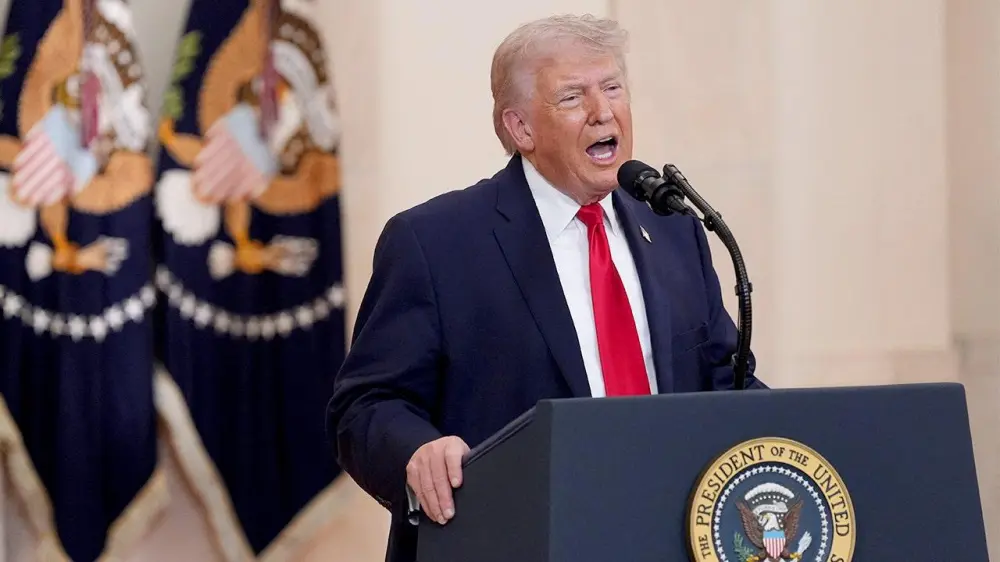
President Donald Trump has announced that the United States could impose tariffs of up to 100% on imports from countries that introduce digital services taxes targeting American technology companies, opening a new chapter in global trade tensions. The warning immediately attracted attention from investors, multinational corporations, and foreign governments because it could significantly affect international commerce, technology investment, and diplomatic relations.
Digital services taxes have become increasingly common in several countries seeking to collect more revenue from large multinational technology companies that generate billions of dollars in online advertising, cloud computing, digital subscriptions, and e-commerce.
Many governments argue that global technology firms should pay taxes where they earn revenue rather than only where they establish corporate headquarters. The United States, however, has consistently argued that many of these taxes unfairly target American companies and create an uneven playing field for international business.
Trump said countries adopting such tax policies should expect a strong response from Washington. According to the administration, imposing steep tariffs would protect American businesses from what it considers discriminatory tax measures while encouraging trading partners to negotiate broader international tax agreements. Although no immediate implementation date has been announced, the proposal has already generated discussions among policymakers and business leaders around the world.
The dispute extends beyond taxation. It reflects a broader competition over how governments should regulate the rapidly expanding digital economy. Technology companies now play a central role in global commerce through online marketplaces, artificial intelligence, cloud infrastructure, digital advertising, streaming platforms, and financial technology services. As their influence continues to grow, governments are increasingly seeking new ways to regulate and tax digital business activities.
Financial markets are watching the situation closely because tariffs often affect supply chains, corporate profits, consumer prices, and investor confidence. Companies that rely on international trade could face higher operating costs if additional duties are introduced, while consumers may ultimately pay more for imported products if businesses pass those costs along.
Trade experts note that previous tariff disputes have demonstrated how quickly tensions can spread across multiple industries. Retaliatory measures by affected countries could influence sectors far beyond technology, including manufacturing, agriculture, automotive exports, consumer electronics, and industrial equipment. Such developments could complicate efforts to strengthen global economic growth following recent geopolitical uncertainty.
The announcement also comes during a period of heightened international debate over corporate taxation. Organizations such as the OECD have spent years attempting to develop common global rules for taxing multinational companies, particularly digital businesses whose operations often span dozens of countries simultaneously. While progress has been made, disagreements remain over how taxing rights should be divided among national governments.
American technology companies continue to dominate many areas of the global digital economy, making the issue politically and economically significant. Businesses operating internationally are seeking greater certainty regarding future tax obligations, while investors hope governments can avoid a prolonged trade dispute that could slow innovation and cross-border investment.
Economists believe the outcome of these negotiations could influence international trade policy for years to come. Whether governments pursue bilateral agreements, multilateral tax reforms, or reciprocal trade measures will shape the future relationship between the world's largest economies and the global technology industry.
For now, Trump's latest tariff warning has added fresh uncertainty to global markets while reinforcing the administration's willingness to use trade policy as leverage in international economic negotiations. Businesses, investors, and foreign governments will be closely monitoring future discussions to determine whether the dispute leads to new trade agreements or a broader escalation in global commercial tensions.


 Cristiano Ronaldo has hinted that the 2026–27 season could be his final year in professional football after more than two decades at the top of the sport.




0 Comments: