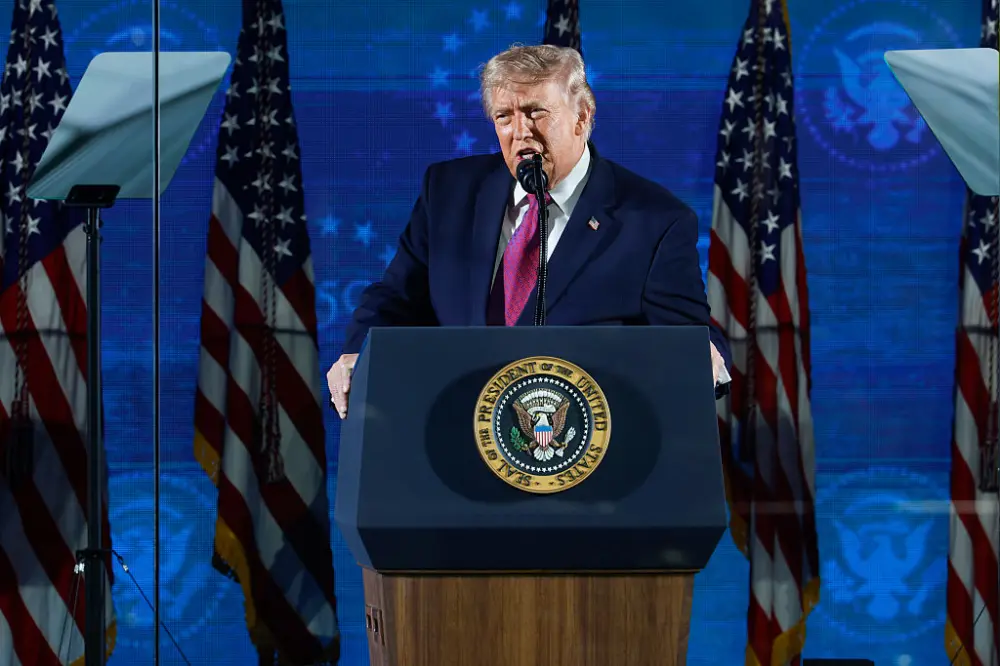
Global trade tensions intensified after U.S. President Donald Trump warned that countries supporting what he described as the "anti-American policies" of the BRICS bloc could face an additional 10% U.S. tariff. The announcement came as leaders from Brazil, Russia, India, China, South Africa, and several newly admitted BRICS members gathered for their annual summit, where expanding economic cooperation and reducing dependence on the U.S. dollar are expected to dominate discussions.
Trump's comments immediately drew worldwide attention because BRICS has grown into one of the world's most influential economic alliances. The expanded group now represents a significant share of global GDP, international trade, energy production, and the world's population. Analysts say any escalation between Washington and BRICS members could have far-reaching consequences for international commerce, financial markets, and diplomatic relations.
According to the U.S. president, countries that adopt policies he believes undermine American economic interests should expect tougher trade measures. While Trump did not identify specific nations that would immediately face the proposed tariff, he indicated that his administration is prepared to use trade policy aggressively to protect U.S. industries and manufacturing jobs. The proposal is expected to become a major topic of discussion among global investors and business leaders over the coming days.
BRICS leaders are expected to use the summit to strengthen cooperation in areas including international payments, infrastructure investment, artificial intelligence, clean energy, food security, and cross-border trade. One of the alliance's long-term objectives is expanding the use of local currencies in international transactions, reducing reliance on the U.S. dollar for trade between member countries. This strategy has become increasingly important as geopolitical tensions continue to reshape global commerce.
Economists warn that another round of tariffs between the United States and major emerging economies could increase costs for businesses, disrupt global supply chains, and place additional pressure on inflation.
Many multinational companies depend heavily on imports and exports involving BRICS countries, particularly in sectors such as technology, automobiles, agriculture, mining, pharmaceuticals, and consumer electronics. New tariffs could affect pricing and investment decisions across multiple industries.
Financial markets are also paying close attention because the BRICS bloc includes several of the world's largest commodity producers. Brazil is a major exporter of agricultural products, Russia is one of the largest energy producers, China remains the world's manufacturing hub, India continues to experience rapid economic growth, and South Africa is an important supplier of critical minerals. Any deterioration in trade relations could influence commodity prices, exchange rates, and investor confidence worldwide.
Trade experts say the latest warning reflects a broader shift toward economic competition among major global powers. Over the past several years, governments have increasingly used tariffs, export controls, industrial subsidies, and investment restrictions as tools to strengthen domestic industries while protecting national security interests. This trend has fundamentally changed the global trading environment, forcing companies to rethink supply chains and manufacturing strategies.
Business organizations have urged both Washington and BRICS governments to continue diplomatic engagement rather than allowing disagreements to develop into a broader trade conflict. Many exporters fear that higher tariffs would reduce international demand, increase operating costs, and slow global economic growth at a time when businesses are already navigating inflation, geopolitical uncertainty, and changing consumer demand.
Officials attending the BRICS summit have not yet issued a formal collective response to Trump's latest remarks. However, diplomats expect trade policy to become one of the central issues discussed during the meetings, alongside efforts to deepen economic cooperation and expand the group's influence in international financial institutions.
The outcome of the summit could shape global trade policy for the remainder of the year. Investors, multinational companies, and governments around the world will be closely watching whether diplomatic dialogue can ease tensions or whether the dispute develops into another major chapter in the ongoing competition between the United States and the rapidly expanding BRICS alliance.


 Cristiano Ronaldo has hinted that the 2026–27 season could be his final year in professional football after more than two decades at the top of the sport.



0 Comments: