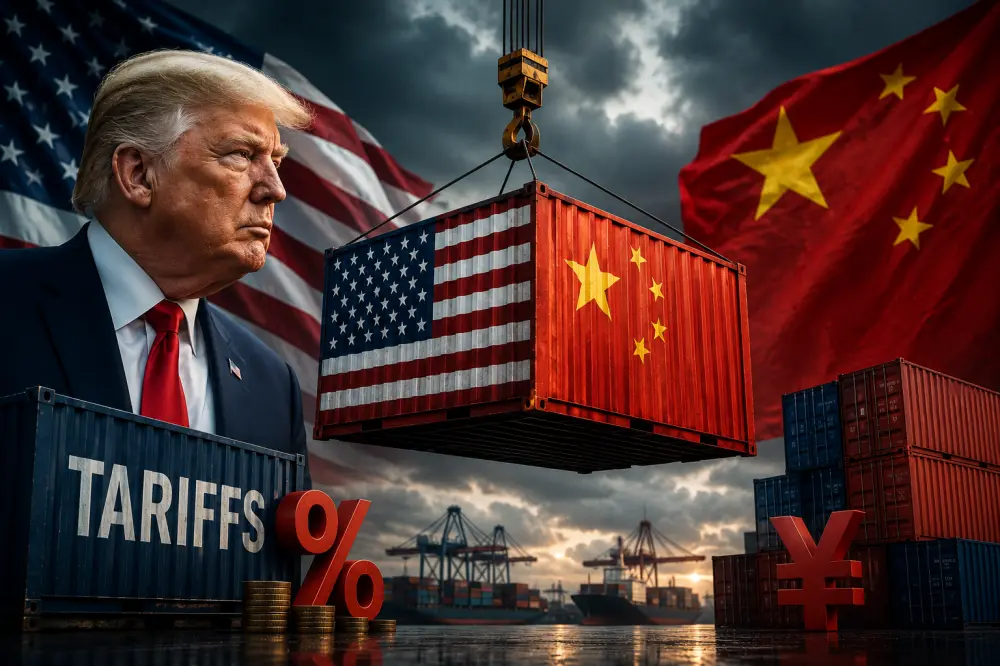
Former U.S. President Donald Trump has indicated that a new round of tariffs on Chinese imports could be introduced if his administration proceeds with its latest trade agenda, renewing concerns about another period of economic tension between the world's two largest economies.
Speaking during recent campaign appearances, Trump argued that stronger trade measures would encourage domestic manufacturing, reduce dependence on foreign supply chains, and protect American industries from what he described as unfair competition.
The proposal has immediately drawn attention from businesses, investors, and international trading partners because tariffs imposed during previous years significantly affected global supply chains, manufacturing costs, and consumer prices.
Economic analysts say any expansion of tariffs could influence industries ranging from electronics and automotive manufacturing to consumer goods and industrial equipment. Many multinational companies now operate complex global supply chains that rely on production across both the United States and China.
Financial markets are closely monitoring developments as investors assess the possible impact on inflation, international trade, and corporate earnings. Importers may face higher costs if additional duties are introduced, while exporters could experience changing demand depending on future policy decisions.
Chinese officials have consistently stated that trade disputes should be resolved through dialogue rather than escalating tariffs. Beijing has repeatedly emphasized the importance of maintaining stable economic relations while protecting its own commercial interests.
Business organizations have expressed mixed reactions. Some manufacturers support stronger protections for domestic industries, while retailers and import-dependent companies warn that higher tariffs could increase costs for businesses and consumers.
Trade experts note that the global economy has changed considerably since earlier rounds of tariff disputes. Companies have diversified manufacturing operations into countries including Vietnam, India, Mexico, and Indonesia in an effort to reduce supply chain risks and improve resilience.
The renewed discussion also comes as artificial intelligence, advanced semiconductors, electric vehicles, and critical minerals become increasingly important areas of economic competition between Washington and Beijing. These industries are expected to remain central to future trade negotiations and industrial policy.
While no final measures have yet been implemented, Trump's latest comments have already reignited debate about the future of U.S.-China economic relations. With both governments seeking to strengthen domestic industries while protecting national interests, global markets are expected to watch closely for further policy announcements that could shape international trade over the coming months.


 Cristiano Ronaldo has hinted that the 2026–27 season could be his final year in professional football after more than two decades at the top of the sport.



0 Comments: