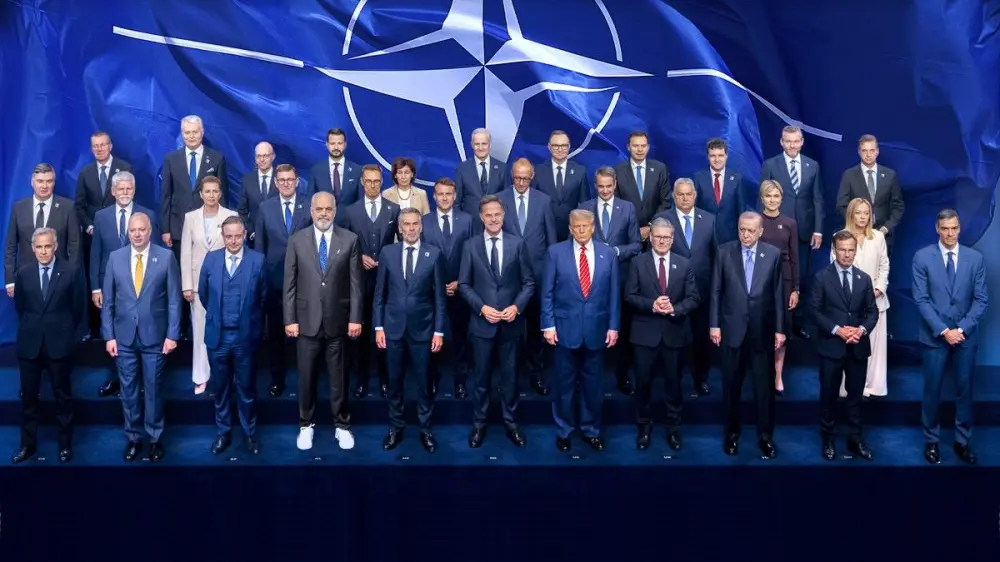
The future of the NATO alliance has once again moved to the center of international politics as U.S. President Donald Trump intensifies pressure on member nations to increase military spending ahead of a major summit that could shape the direction of Western security policy for years to come. The debate has reopened longstanding questions about burden-sharing within the alliance and the role the United States intends to play in European defense at a time of growing geopolitical uncertainty.
Trump has repeatedly argued that many NATO members rely too heavily on American military power while failing to invest adequately in their own defense capabilities. His administration has pushed allies to dramatically increase military expenditures and has warned that Washington expects greater contributions from countries benefiting from NATO's collective security framework. The issue has become one of the defining themes of Trump's foreign policy approach toward Europe.
The renewed pressure comes ahead of a critical NATO summit scheduled to bring together leaders from across the alliance. NATO Secretary-General Mark Rutte is actively working to ease tensions between Washington and European capitals before the gathering, seeking to prevent disagreements over spending from overshadowing broader discussions about security, military readiness, and emerging global threats.
European governments have responded by emphasizing recent increases in military budgets and highlighting efforts already underway to strengthen defense capabilities. Several countries have expanded defense investments significantly over the past two years, citing security concerns, geopolitical instability, and the need to modernize armed forces. NATO officials say many members are now moving toward higher spending targets than at any point in recent history.
Despite those efforts, disagreements remain over how quickly nations should raise defense spending and what percentage of economic output should be devoted to military and security-related activities.
Some Eastern European countries have emerged as strong supporters of accelerated military investment, arguing that changing global security conditions require urgent action. Others remain concerned about the economic costs of rapidly expanding defense budgets at a time when governments are also facing pressure to fund healthcare, infrastructure, and social programs.
The debate extends beyond budgets. NATO leaders are also discussing how modern warfare is evolving through advances in drone technology, cybersecurity, artificial intelligence, satellite systems, and missile defense. Many policymakers argue that future security challenges will require investments not only in traditional military forces but also in digital infrastructure and technological innovation.
Trump's criticism of NATO has attracted global attention because it raises broader questions about the future of transatlantic cooperation. For decades, the alliance has served as the cornerstone of Western security architecture. Any significant shift in U.S. commitment or changes in burden-sharing arrangements could have major implications for Europe, North America, and international stability.
Financial markets and defense companies are also closely watching developments. Increased military spending commitments could trigger billions of dollars in new contracts for defense manufacturers, cybersecurity firms, aerospace companies, and technology providers. Analysts expect defense-related industries to remain among the sectors most influenced by decisions emerging from upcoming NATO discussions.
The summit is expected to address a wide range of issues, including military readiness, alliance modernization, regional security challenges, and long-term strategic planning. However, defense spending remains the issue generating the greatest political attention, largely because of Trump's insistence that allies contribute more toward collective defense responsibilities.
With world leaders preparing for high-stakes negotiations, the outcome of the summit could influence the future direction of NATO and shape international security policy well beyond Europe.
Whether the alliance emerges more unified or more divided may depend on how successfully leaders bridge differences over spending, strategy, and the evolving role of the United States within the world's most powerful military alliance.


 Cristiano Ronaldo has hinted that the 2026–27 season could be his final year in professional football after more than two decades at the top of the sport.


0 Comments: