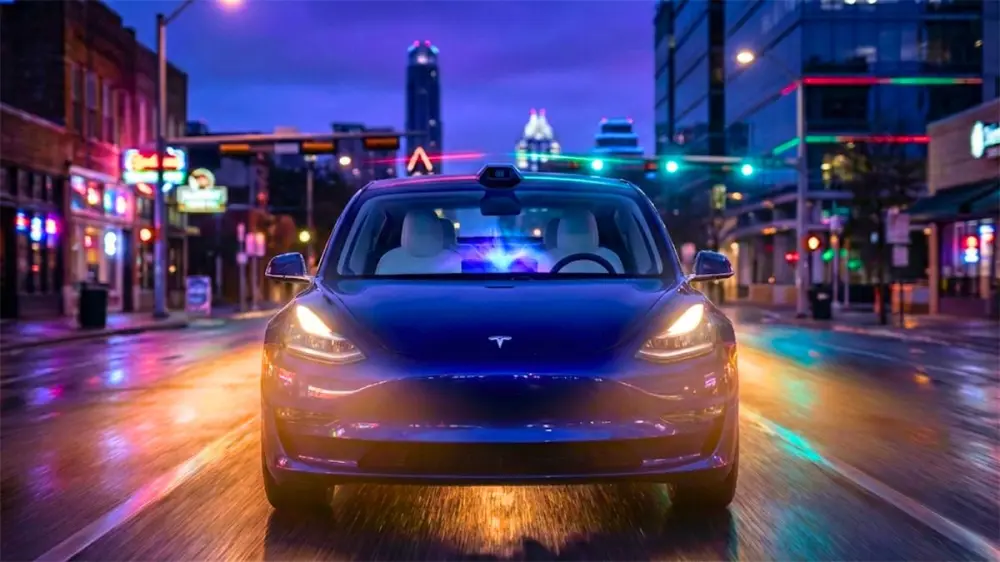
Tesla has taken another major step toward the future of transportation by expanding its AI-powered Robotaxi program, bringing autonomous driving technology closer to everyday consumers. The move represents one of Elon Musk's most ambitious efforts yet to transform Tesla from an electric vehicle manufacturer into a global artificial intelligence and robotics company.
The expanded Robotaxi service uses Tesla's latest Full Self-Driving (FSD) technology, powered by advanced neural networks trained on billions of miles of real-world driving data. According to Tesla, the system continuously improves through artificial intelligence, allowing vehicles to recognize traffic conditions, pedestrians, road signs, and unexpected hazards with increasing accuracy.
Elon Musk has repeatedly described autonomous driving as the company's most valuable long-term opportunity. Rather than relying on traditional ride-hailing services, Tesla's vision allows owners to eventually place their vehicles into a shared Robotaxi network, generating income whenever the cars are not being used personally.
The announcement comes as competition in autonomous driving intensifies. Companies including Waymo, Zoox, Baidu, and several Chinese technology firms are investing billions of dollars into AI-powered transportation, creating one of the fastest-growing sectors within artificial intelligence.
Industry analysts believe autonomous vehicles could reshape global transportation over the next decade by reducing traffic accidents, lowering transportation costs, and improving mobility for millions of people. However, regulators continue demanding rigorous safety testing before large-scale deployment becomes possible.
Tesla's AI systems rely heavily on computer vision rather than expensive lidar sensors, a strategy Musk argues makes autonomous driving more scalable and affordable. The company continues refining its neural networks using data collected from millions of Tesla vehicles operating worldwide.
Investors remain optimistic that artificial intelligence could become Tesla's largest business segment in the future, extending beyond electric vehicles into robotics, autonomous transportation, manufacturing automation, and AI software services.
The expansion also reflects the broader race between American and Chinese AI companies. As artificial intelligence becomes increasingly central to transportation, governments and regulators are working to establish safety standards while encouraging innovation in one of the world's most competitive technology sectors.
Although challenges remain, Tesla's latest Robotaxi expansion demonstrates how rapidly AI is moving from research laboratories into everyday life. If successful, autonomous transportation could become one of the biggest technological revolutions since the invention of the smartphone, fundamentally changing how people travel, work, and move around cities in the years ahead.

 Cristiano Ronaldo has hinted that the 2026–27 season could be his final year in professional football after more than two decades at the top of the sport.
0 Comments: