Russia launched one of its largest recent missile and drone attacks on Kyiv and the surrounding region early Wednesday, killing at least 17 people and injuring at least 44 others in an assault that has intensified Ukraine's warnings about a critical shortage of air defense interceptors.
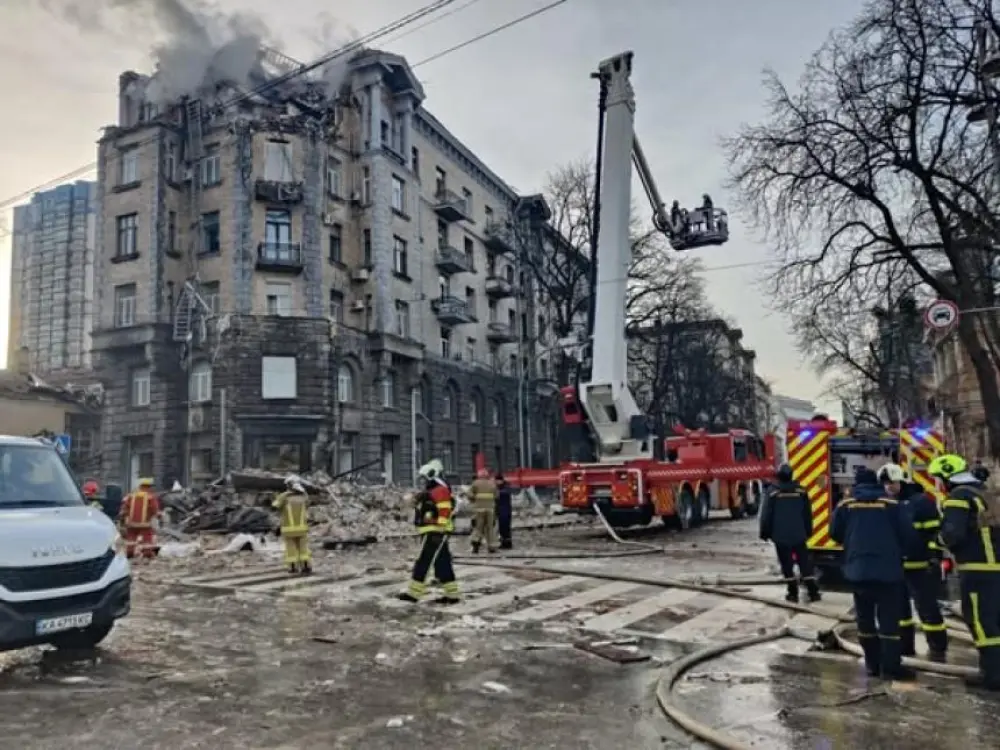
The attack struck civilian and infrastructure sites across the capital region, while emergency crews continued searching damaged buildings and putting out fires after the overnight barrage.
Ukrainian President Volodymyr Zelenskyy said the scale of the attack demonstrated the urgent need for additional air defense support from Western allies. Ukrainian officials have repeatedly warned that the country is running short of interceptor missiles for its U.S.-made Patriot systems, which are among the few systems capable of defending against some of Russia's most advanced ballistic missiles.
The attack involved a combination of ballistic missiles, hypersonic weapons and drones, creating a complex challenge for Ukrainian air defense crews. Ukrainian authorities said dozens of drones were intercepted, but the country's air force reported that none of the incoming ballistic missiles were successfully shot down during the latest assault.
The consequences were severe across Kyiv and nearby areas. Buildings and industrial facilities were damaged, fires broke out in multiple locations and emergency workers were deployed across the region to rescue victims and secure damaged structures. A postal distribution center and other civilian facilities were among the locations affected by the strikes.
Thursday has been declared a day of mourning in Kyiv following the deaths. Authorities continue assessing the full extent of the damage, meaning the casualty figures could change as rescue and recovery operations continue.
Russia has maintained that its strikes are directed at military-related infrastructure, transportation facilities and sites connected to Ukraine's defense industry. Ukrainian officials, however, say the latest barrage caused extensive damage to civilian businesses and infrastructure, once again raising international concern over the humanitarian consequences of the continuing war.
The attack comes at a particularly difficult moment for Ukraine because of the growing pressure on its air defense network. Patriot interceptors are expensive and difficult to produce quickly, while demand for the systems has increased globally as several countries seek stronger defenses against ballistic missiles and drones.
Zelenskyy has repeatedly urged the United States and European governments to accelerate deliveries of air defense ammunition. Kyiv argues that additional interceptors could save civilian lives by preventing missiles from reaching populated areas, particularly during large combined attacks designed to overwhelm defensive systems.
The shortage is becoming one of the most important military issues facing Ukraine. Russia has increasingly relied on large waves of drones and missiles, forcing Ukrainian forces to make difficult decisions about which incoming targets receive priority. When interceptor stocks are limited, defending every city and critical facility becomes considerably more difficult.
The latest attack is also likely to increase pressure on European governments to strengthen military assistance to Ukraine. European leaders have repeatedly emphasized that Ukraine's security is directly connected to the security of the wider continent, particularly as Russia continues launching long-range attacks deep inside Ukrainian territory.
The issue is expected to feature prominently in discussions between the United States and its European allies. U.S. Secretary of State Marco Rubio and British Foreign Secretary Ed Miliband were already discussing Ukraine's security and Europe's role in supporting Kyiv during meetings in Washington on Wednesday. Miliband reaffirmed Britain's support for Ukraine while emphasizing that European security and transatlantic security are closely connected.
The attack also comes while diplomatic efforts to end the war remain uncertain. The United States has been attempting to push Russia and Ukraine toward negotiations, but continued attacks demonstrate how difficult it remains to establish a lasting reduction in hostilities.
For Russia, maintaining pressure on Ukrainian cities and infrastructure provides another way of demonstrating its military capabilities while negotiations continue. For Ukraine, protecting its population and critical infrastructure remains an increasingly urgent challenge as Russian attacks become more sophisticated and large-scale.
The humanitarian consequences extend beyond the immediate casualties. Repeated missile and drone strikes damage homes, businesses, transportation networks and energy infrastructure, forcing communities to spend valuable resources on emergency repairs rather than economic development and reconstruction.
Ukraine's economy has already endured years of wartime disruption, and every major attack adds additional costs to the eventual rebuilding effort. Businesses must operate under the threat of further strikes while local governments continue repairing infrastructure that may be targeted again.
The latest barrage therefore carries significance far beyond Kyiv. It highlights the continuing military pressure on Ukraine, the growing importance of advanced missile defense technology and the difficult decisions facing Western governments over how much military assistance they can provide.
As rescue teams continue working through the aftermath, Ukraine is once again asking its allies for more Patriot interceptors and other air defense systems. The immediate priority is protecting civilians from the next attack, but the broader question is whether Ukraine's partners can supply enough defensive weapons to sustain that protection over the long term.
With Russia continuing its long-range campaign and Ukraine warning that its interceptor stocks are dangerously low, the latest attack has created renewed pressure on Washington and European capitals to respond. The coming weeks could prove critical not only for Ukraine's air defenses but also for the wider security balance in Europe.

 Cristiano Ronaldo has hinted that the 2026–27 season could be his final year in professional football after more than two decades at the top of the sport.

0 Comments: