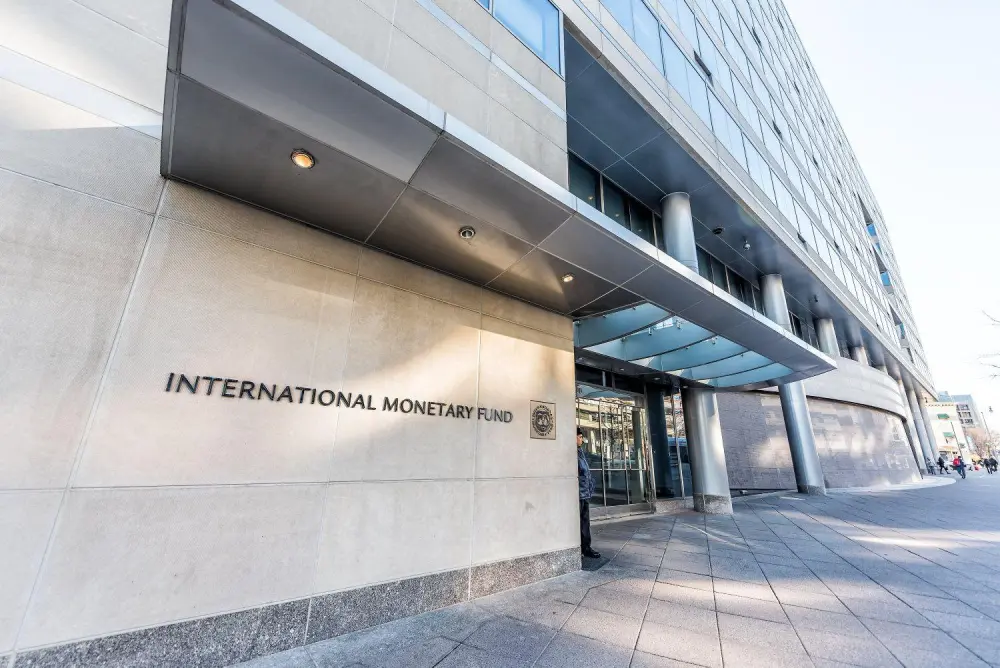
Global trade is entering a period of significant transformation, but the U.S. dollar continues to hold its position as the world's dominant currency despite increasing geopolitical tensions and shifting economic alliances. That is the latest assessment from the International Monetary Fund, which says recent changes in trade relationships have not weakened the dollar's central role in international finance.
According to the IMF, countries are gradually adjusting their trade strategies following the introduction of new tariffs, regional conflicts, and changing diplomatic relationships. Many governments are expanding commercial partnerships with new markets while businesses continue diversifying supply chains to reduce exposure to geopolitical risks. Although these shifts are changing how countries trade with one another, they have not fundamentally altered the structure of the global financial system.
The organization's outgoing chief economist, Pierre-Olivier Gourinchas, said the dollar remains firmly at the center of global commerce. International trade contracts, banking transactions, foreign exchange reserves, and cross-border investments continue to rely heavily on the U.S. currency. While discussions about reducing dependence on the dollar have gained attention in recent years, the IMF believes there is still little evidence that another currency is close to replacing it on a global scale.
The comments come after months of economic uncertainty driven by trade disputes, higher tariffs, and geopolitical conflicts that have forced governments and multinational companies to rethink long-established trading relationships. Several countries have increased trade with regional partners while negotiating new economic agreements designed to strengthen supply chains and reduce dependence on traditional markets. Even so, international payments, commodity pricing, and financial settlements continue to be overwhelmingly conducted in U.S. dollars.
Analysts say one reason the dollar remains dominant is the depth and stability of U.S. financial markets. Investors continue to view U.S. government bonds and dollar-denominated assets as among the safest investments during periods of economic uncertainty. This has helped maintain strong global demand for the currency even as some nations promote alternative payment systems and local currency settlements.
The IMF also noted that gold prices have risen sharply over recent years, but much of that increase has been driven by investment demand rather than a large-scale shift away from the dollar. Exchange-traded funds, institutional investors, and financial products linked to gold have attracted significant capital, yet central banks have not moved in sufficient numbers to fundamentally reshape the global monetary system.
Businesses are closely watching these developments because global trade patterns influence manufacturing, exports, shipping costs, commodity prices, and investment decisions. Companies operating across multiple countries are increasingly adjusting sourcing strategies and expanding into new markets to reduce exposure to future trade disruptions while maintaining access to global consumers.
Economists believe the coming months will be important as governments continue negotiating new trade agreements and responding to evolving geopolitical risks. Although commercial relationships may continue changing, the IMF expects the dollar to remain the foundation of international finance for the foreseeable future unless a major structural shift occurs in the global economy.
For investors, policymakers, and multinational businesses, the IMF's latest assessment provides an important reminder that while global trade routes may continue evolving, the financial system supporting those transactions remains largely unchanged. The dollar continues to serve as the backbone of international commerce, and any future challenge to its dominance would likely require years of structural economic transformation rather than short-term geopolitical developments.


 Cristiano Ronaldo has hinted that the 2026–27 season could be his final year in professional football after more than two decades at the top of the sport.

0 Comments: