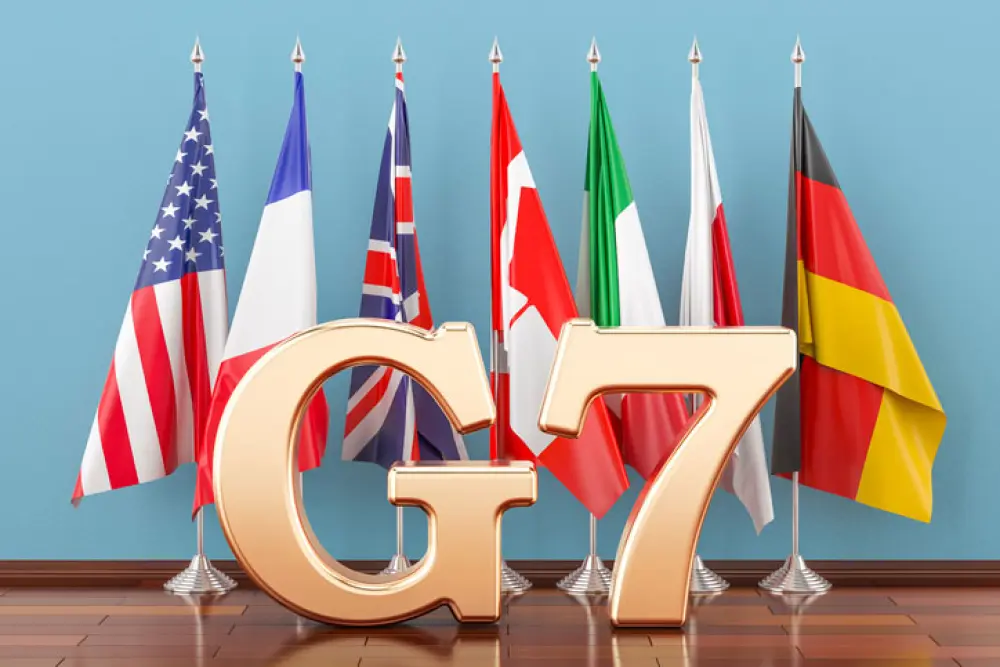
The world's leading industrialized nations have taken a major step toward reshaping global supply chains after G7 leaders agreed to establish a new critical minerals alliance designed to reduce dependence on China for some of the most strategically important resources in the modern economy.
The initiative reflects growing concern among Western governments about the concentration of global supplies of rare earth elements, lithium, nickel, and other minerals that are essential for manufacturing electric vehicles, renewable energy technologies, advanced semiconductors, defense equipment, and artificial intelligence infrastructure. G7 leaders said the new framework will focus on strengthening cooperation, coordinating stockpiles, and accelerating investments in alternative supply networks.
The decision comes after years of warnings from policymakers and industry leaders who argue that excessive dependence on a single supplier creates economic and national security risks. China currently dominates large portions of the global processing industry for critical minerals, giving Beijing significant influence over supply chains that support everything from smartphones and computer servers to military hardware and clean-energy technologies.
Concerns intensified after previous Chinese export restrictions on certain rare earth products disrupted global markets and exposed vulnerabilities across multiple industries. Manufacturers in Europe, North America, and Asia have increasingly pushed governments to secure alternative sources of supply amid fears that future geopolitical tensions could create additional disruptions.
Under the new initiative, G7 countries plan to align stockpiling strategies, improve information sharing, and work more closely with international partners to diversify production and processing capabilities. Leaders have also outlined long-term targets aimed at reducing reliance on any single external supplier for key minerals used in strategic industries.
The economic implications are significant. Critical minerals have become one of the most valuable resources in the global transition toward cleaner energy systems and advanced digital technologies. Demand for lithium, cobalt, graphite, and rare earth elements is expected to increase substantially over the coming decade as countries expand electric vehicle production, renewable energy infrastructure, battery manufacturing, and artificial intelligence computing capacity.
Industry analysts say the competition for mineral resources is increasingly becoming one of the defining economic battles of the twenty-first century. Nations that secure reliable access to these materials are likely to gain advantages in emerging industries, while countries that remain dependent on concentrated supply chains could face higher costs and greater vulnerability to disruptions.
The alliance also signals a broader shift in global economic policy. Governments that once prioritized efficiency and low-cost sourcing are now placing greater emphasis on resilience, diversification, and economic security. The COVID-19 pandemic, geopolitical conflicts, and trade disputes have all contributed to a growing belief that supply chains must be strengthened against unexpected shocks.
Investment opportunities linked to critical minerals have expanded rapidly as governments and private companies race to secure future supplies. Mining projects, processing facilities, recycling operations, and infrastructure developments are receiving increased attention from investors seeking exposure to sectors expected to benefit from long-term demand growth.
Despite the ambitious goals, experts caution that reducing dependence on China will not happen quickly. China has spent decades building dominant positions across multiple stages of the supply chain, including mining, refining, processing, and manufacturing. Replicating that ecosystem will require substantial investment, regulatory support, and international coordination.
Nevertheless, G7 leaders appear determined to accelerate the transition. With technology, energy security, defense readiness, and economic competitiveness increasingly tied to access to critical minerals, policymakers view the issue as one of the most important strategic challenges facing advanced economies today. The alliance marks one of the clearest signals yet that governments are preparing for a future in which control of mineral resources could play a role similar to oil in previous decades.


 Cristiano Ronaldo has hinted that the 2026–27 season could be his final year in professional football after more than two decades at the top of the sport.


0 Comments: