The global artificial intelligence race entered a new phase after Chinese President Xi Jinping announced an ambitious strategy aimed at positioning China as a leader in the next generation of AI development.
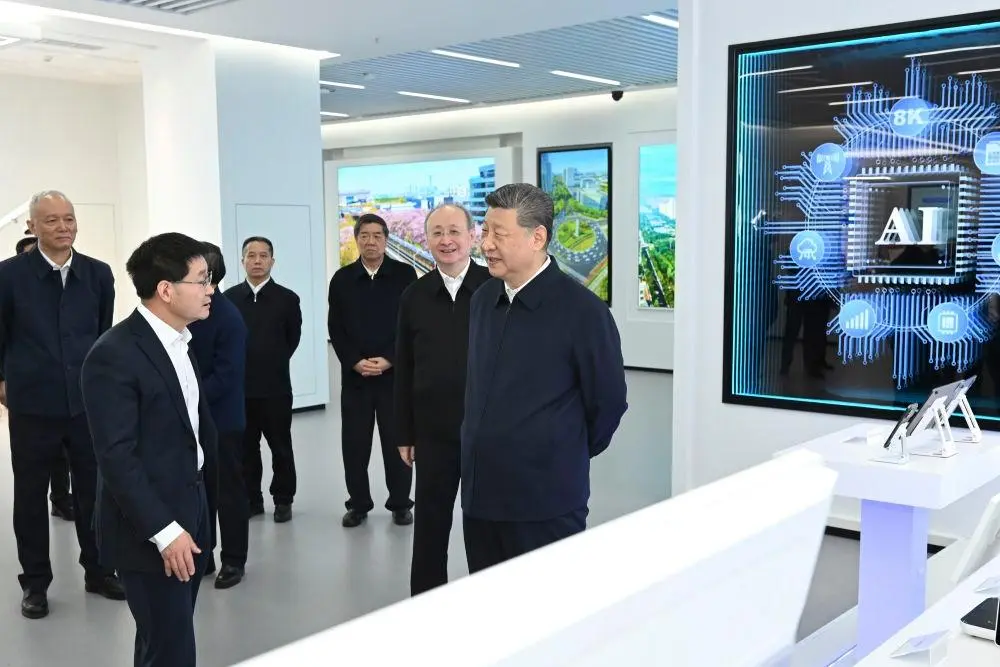
Speaking at the opening of the World Artificial Intelligence Conference (WAIC) in Shanghai, Xi called for greater international cooperation while promoting China's vision of open-source artificial intelligence as an alternative to Western-led AI development.
During his keynote speech, Xi described artificial intelligence as one of the most transformative technologies in modern history, comparing its impact to the Industrial Revolution and the rise of the internet.
He urged governments, businesses, and researchers to work together to ensure AI benefits all nations rather than remaining concentrated among a small number of powerful companies and countries.
One of the biggest announcements from the conference was the launch of the World AI Cooperation Organisation (WAICO), an international alliance that begins with 29 member countries.
Chinese officials say the organization will promote AI collaboration, shared technical standards, and wider access to advanced AI technologies, particularly for developing economies.
China also highlighted the rapid growth of its domestic AI ecosystem. Startup Moonshot AI introduced one of the world's largest open-source language models, underscoring China's determination to compete directly with leading AI developers including OpenAI, Anthropic, Google DeepMind, Meta, and xAI. Analysts say Chinese AI companies are narrowing the technological gap much faster than many expected.
Xi emphasized that artificial intelligence should remain accessible and inclusive. He warned that unequal access to AI could create a new form of technological inequality between nations and argued that open-source development can help accelerate innovation while allowing more countries to participate in the AI economy.
The announcement comes as competition between the United States and China over artificial intelligence continues to intensify. Washington has focused on strengthening domestic AI leadership through investment, semiconductor manufacturing, and export controls on advanced chips.
China, meanwhile, is expanding its own AI capabilities while encouraging international collaboration through new partnerships and open-source initiatives.
Technology analysts believe the creation of WAICO could become one of the most significant developments in global AI governance. The organization aims to encourage research cooperation, establish common technical standards, and support responsible AI development across member countries while promoting wider adoption of advanced AI technologies.
The AI race is increasingly shaping global economics, national security, and technological innovation. Governments around the world are investing billions of dollars in AI infrastructure, cloud computing, semiconductor production, and advanced research as they compete to lead what many experts describe as the defining technology of the 21st century.
With China accelerating investment and expanding international partnerships, the competition between Beijing and Washington is entering a new chapter.
The outcome will influence not only the future of artificial intelligence but also global technology standards, international trade, and the balance of technological leadership for years to come.


 Cristiano Ronaldo has hinted that the 2026–27 season could be his final year in professional football after more than two decades at the top of the sport.
0 Comments: