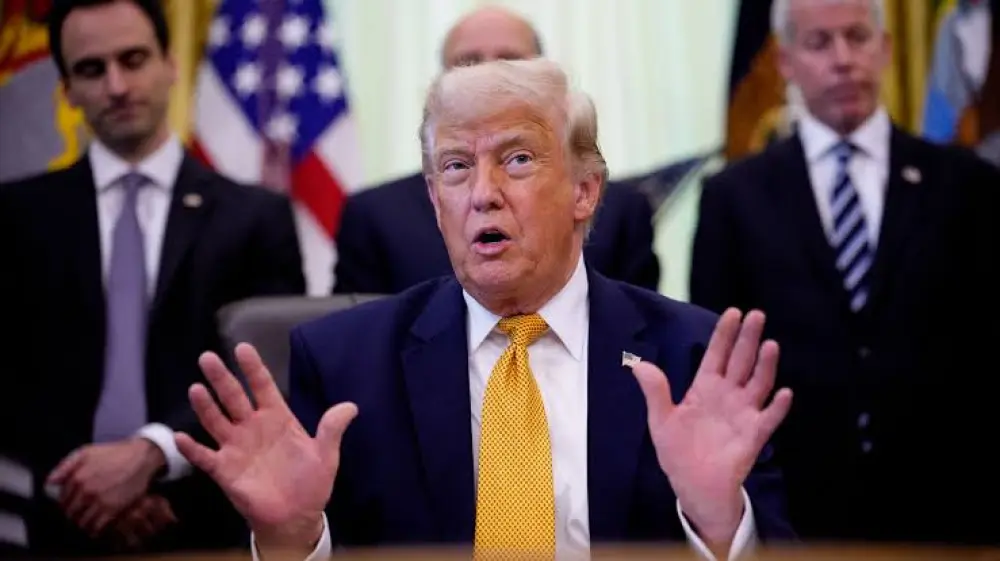
The fragile diplomatic progress between the United States and Iran has come under renewed pressure after President Donald Trump accused Tehran of being behind an attack on a commercial vessel operating near the Strait of Hormuz. The incident has immediately raised concerns among governments, shipping companies, and global energy markets because the narrow waterway remains one of the world's most strategically important maritime routes.
According to U.S. officials, the vessel was struck while transiting waters near Oman, prompting an immediate security response and renewed attention on one of the busiest shipping lanes on the planet. Trump publicly blamed Iran for the attack, arguing that such actions threaten international commerce and undermine ongoing diplomatic efforts aimed at securing long-term peace in the region. Iranian authorities have not accepted the accusations, adding another layer of uncertainty to already delicate negotiations.
The Strait of Hormuz carries a substantial share of the world's crude oil exports every day, making security in the area vital to the global economy. Even isolated attacks or security incidents can trigger concerns about disruptions to energy supplies, insurance costs, and international shipping operations. Financial markets reacted cautiously as traders assessed whether the latest incident could affect the movement of oil tankers through the Gulf.
The accusations come only days after both countries appeared to make progress toward maintaining a fragile ceasefire following months of military confrontation. Diplomats have been attempting to build momentum toward a broader agreement covering regional security, sanctions relief, maritime safety, and nuclear issues. However, incidents such as the latest ship attack risk undermining confidence on both sides and complicating already difficult negotiations.
Security analysts say attacks involving commercial shipping carry consequences far beyond the immediate region. Shipping companies often review sailing routes, insurers reassess risk premiums, and governments may increase naval patrols to protect international trade. Any prolonged disruption could affect global supply chains, fuel prices, and inflation, particularly for countries heavily dependent on imported energy.
The United States has repeatedly emphasized that freedom of navigation through the Strait of Hormuz remains a strategic priority. Washington maintains a military presence in the Gulf alongside several allied nations to help protect commercial shipping and deter attacks against civilian vessels. Previous incidents in the region have prompted multinational naval operations aimed at safeguarding one of the world's busiest maritime corridors.
Iran has consistently argued that security in the Gulf should primarily be managed by countries within the region. Tehran has also rejected accusations linking it directly to several previous maritime incidents, often describing such claims as politically motivated. The latest exchange of accusations is therefore likely to further complicate diplomatic efforts that were already facing disagreements over sanctions, nuclear inspections, and regional security guarantees.
Energy markets remain especially sensitive to developments involving the Strait of Hormuz because roughly one-fifth of globally traded oil passes through the narrow passage. Even if exports continue without interruption, heightened geopolitical tensions often influence investor sentiment, contributing to short-term price volatility across commodity markets.
International leaders have responded by urging restraint from all parties while encouraging continued diplomatic engagement. Several governments have stressed that preserving maritime security is essential not only for regional stability but also for maintaining confidence in global trade and energy markets. Calls for an independent investigation into the incident have also grown as officials seek to establish responsibility before tensions escalate further.
The latest developments illustrate how quickly progress toward peace can be challenged by new security incidents. While diplomatic channels between Washington and Tehran remain open, the attack near the Strait of Hormuz serves as a reminder that the path toward lasting stability in the Middle East remains uncertain. Investors, governments, and businesses around the world will now closely watch whether both sides continue negotiations or whether the latest confrontation leads to another period of heightened regional tension.

 Cristiano Ronaldo has hinted that the 2026–27 season could be his final year in professional football after more than two decades at the top of the sport.
0 Comments: