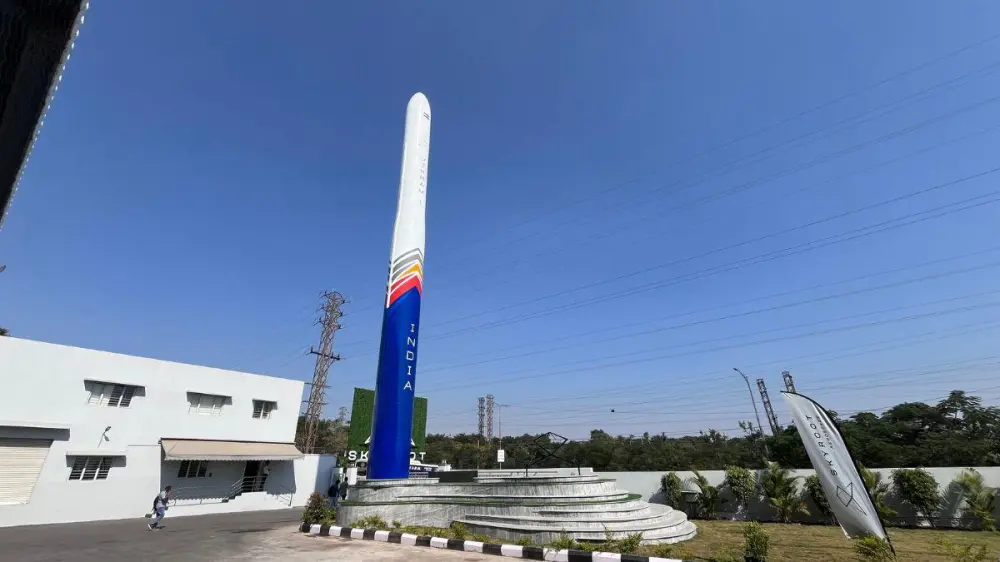
India has entered a new era of commercial space exploration after Skyroot Aerospace successfully launched Vikram-1, the country's first privately developed orbital rocket. The mission represents a historic achievement not only for the Indian startup but also for India's rapidly expanding private space industry, which is increasingly positioning itself as a global competitor in satellite launch services.
The successful launch took place from the Satish Dhawan Space Centre in Sriharikota, where Vikram-1 lifted off carrying multiple customer payloads into orbit. Engineers celebrated the mission as confirmation that privately built launch vehicles can now operate alongside the government-led Indian Space Research Organisation (ISRO), opening new opportunities for commercial space missions.
Skyroot Aerospace was founded by former ISRO engineers with the goal of making satellite launches faster, more affordable, and more accessible to customers worldwide. The company has spent years developing Vikram-1 using modern manufacturing techniques, lightweight composite materials, and advanced propulsion systems designed to reduce launch costs while improving reliability.
The successful mission comes during a period of extraordinary growth in the global space economy. Demand for launching small satellites has increased rapidly as governments, universities, telecommunications companies, and Earth observation firms deploy thousands of new spacecraft to support internet connectivity, climate monitoring, navigation, agriculture, and scientific research.
India's government has actively encouraged private investment in the space sector through regulatory reforms that allow companies to build rockets, satellites, and launch infrastructure. Those changes have attracted significant domestic and international investment, creating one of the fastest-growing space startup ecosystems in the world.
Industry analysts believe Skyroot's success could transform India's position within the commercial launch market. Until recently, companies seeking affordable satellite launches largely depended on providers in the United States, Europe, and China. The arrival of competitive Indian launch services introduces another major player capable of serving the rapidly expanding global satellite industry.
Competition in commercial spaceflight continues intensifying. Companies such as SpaceX, Rocket Lab, Firefly Aerospace, and several emerging European launch providers are racing to secure contracts from governments and private satellite operators. Skyroot now joins that growing list, offering customers another option for placing payloads into orbit.
Experts also see broader economic benefits from the mission. A successful domestic commercial launch industry creates high-skilled engineering jobs, strengthens advanced manufacturing capabilities, and encourages innovation in fields ranging from artificial intelligence and robotics to telecommunications and materials science.
The achievement is particularly significant because it demonstrates how private companies can complement national space agencies rather than replace them. ISRO is expected to continue leading ambitious scientific missions while startups like Skyroot focus on commercial opportunities and rapid launch services.
As demand for satellites continues growing around the world, India's successful private orbital launch signals the beginning of a new chapter for the country's space ambitions. With Vikram-1 now proving its capabilities, Skyroot Aerospace has positioned itself as one of the most closely watched companies in the global commercial space industry, and the success of this mission could pave the way for many more privately funded launches in the years ahead.


 Cristiano Ronaldo has hinted that the 2026–27 season could be his final year in professional football after more than two decades at the top of the sport.




0 Comments: