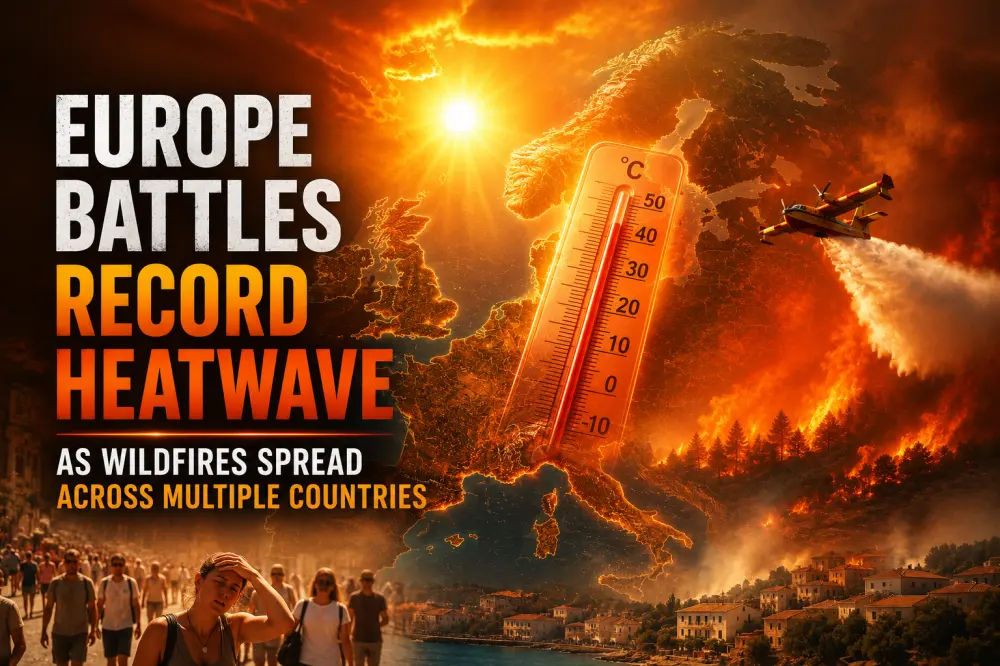
A powerful heatwave has pushed temperatures to record levels across parts of Europe, triggering fast-moving wildfires, forcing thousands of people to evacuate, and placing emergency services under intense pressure. Authorities in several countries have issued red-alert weather warnings as firefighters continue battling dozens of active blazes.
The extreme temperatures have affected communities across southern Europe, with prolonged dry conditions creating ideal circumstances for rapidly spreading fires. Local officials say strong winds and intense heat have complicated firefighting efforts, allowing flames to move quickly through forests and rural communities.
Emergency responders have evacuated residents from multiple towns while aircraft and ground crews work around the clock to contain the fires. Several highways have been temporarily closed, and authorities have urged people living near affected areas to follow evacuation instructions immediately.
The severe weather has also disrupted travel during one of Europe's busiest tourism seasons. Flight schedules, rail services, and road transportation have experienced delays as smoke and extreme heat affect infrastructure and visibility. Popular holiday destinations have introduced additional safety measures to protect visitors.
Health officials are warning vulnerable groups, including older adults, young children, and people with underlying medical conditions, to avoid prolonged exposure to the heat. Hospitals across several regions have reported an increase in patients suffering from dehydration, heat exhaustion, and respiratory problems linked to smoke.
Scientists say heatwaves like this are becoming more frequent and more intense. Rising global temperatures have extended wildfire seasons in many parts of Europe, increasing pressure on emergency services and raising concerns about long-term environmental and economic impacts.
The agricultural sector is also feeling the effects.
Farmers have reported damage to crops, while water shortages in some regions have led authorities to introduce temporary restrictions on water use. Analysts warn that continued extreme weather could affect food production and energy demand in the coming weeks.
European governments continue coordinating emergency responses while requesting additional firefighting resources where necessary. International cooperation has become increasingly important as neighboring countries share aircraft, personnel, and equipment to combat large-scale wildfires.
Meteorologists expect some areas to remain under dangerous heat conditions over the coming days, meaning the wildfire risk is likely to remain high. Officials are urging residents and tourists to monitor local emergency updates, avoid lighting fires outdoors, and report any signs of new wildfires immediately.
As Europe confronts another summer of extreme weather, the latest heatwave highlights the growing challenges posed by climate-related disasters and the increasing need for coordinated emergency preparedness across the continent.

 Cristiano Ronaldo has hinted that the 2026–27 season could be his final year in professional football after more than two decades at the top of the sport.


0 Comments: